
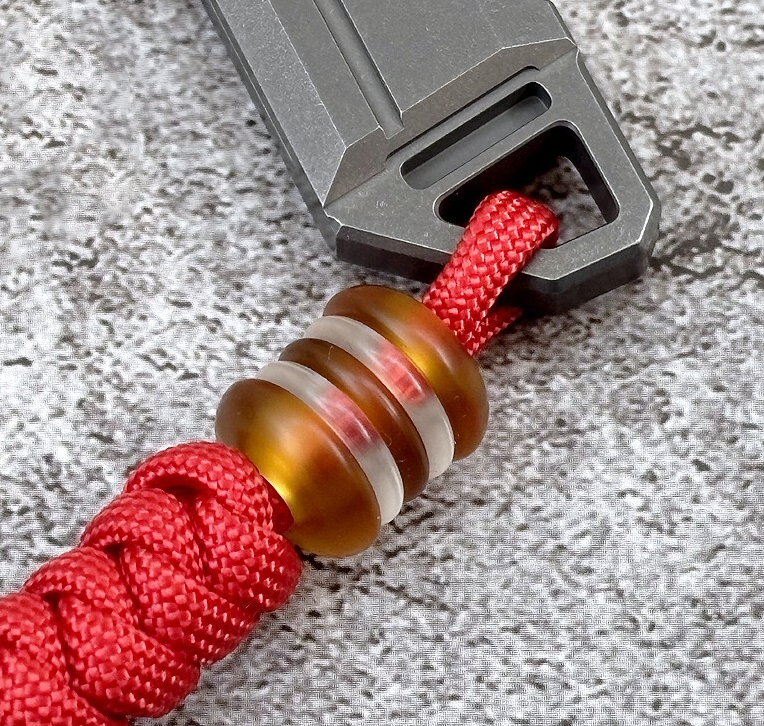

Acrylic paracord beads are lightweight plastic beads designed to slide onto paracord for decorative and functional purposes. They offer bright colors, diverse shapes, and easy handling at a lower cost than metal alternatives, making them ideal for bracelets, lanyards, keychains, and other DIY paracord projects.
More about paracord beads:
Why Choose Acrylic Over Metal or Other Materials?
- Lightweight: A typical 10 мм acrylic bead weighs around 0.5 grams compared to 3–5 grams for steel. This prevents bracelets from feeling bulky for all-day wear.
- Temperature Neutral: They do not conduct heat or cold, unlike metal beads, which can become uncomfortable in extreme temperatures.
- Corrosion Resistance: They do not corrode, rust, or tarnish when exposed to sweat, water, or humidity.
- Color Range: The color range is unmatched (neon, translucent, glow-in-the-dark, swirls). Acrylic wins where visual impact matters more than tactical weight.
- Cost: Acrylic beads typically run $0.10–0.30 per piece, while comparable metal beads start at $1–3 each.
What Are the Real Limitations?
Decorative Acrylic Skull Beads on Paracord Lanyard
- Softness: Acrylic is softer than metal. It scratches easily and can crack if dropped hard. For heavy-duty survival gear, metal remains the better choice.
- Heat Sensitivity: Acrylic softens around 160–180°F and can deform if left on a hot dashboard or near a campfire.
- Rough Edges: Some acrylic beads have sharp edges inside the bore hole from manufacturing. Always check the interior before threading the paracord—rough edges can fray your cord over time.
Paracord Bead Sizes: How to Match Bead Diameter to Your Cord
| Cord Type | Outer Diameter | Ideal Bore Hole for Sliding | Notes |
| Standard 550 Paracord | ~4 мм | 5–6 мм | Gives clearance without wobble. |
| Double-Strand 550 | ~8 мм | 8–10 мм minimum | Needed for easy parallel threading. |
| Micro Paracord | 1.18 мм | 2–3 мм | Often sold as jewelry findings. |
| 275 Paracord | 2 мм | 3–4 мм | Less common bead size. |
Tip: Thread a test piece of your actual paracord through the bead before committing to a large order. Bore hole measurements from suppliers can vary by 0.5–1 мм.
Shape Selection: Function Meets Design
- Round beads (spherical or barrel-shaped) are the most versatile. They don’t create pressure points.
- Skull beads, dice, and novelty shapes add personality but work best as focal points rather than repeating elements due to directional orientation.
- Flat disc beads (coin-shaped) sit flush and work well as spacers. Less likely to snag.
- Tube beads (cylindrical) are excellent for lanyards where you want the bead to hang straight.
Color and Transparency: Beyond Aesthetics
- Opaque solid colors hide dirt and wear better. Stick with darker colors for outdoor gear.
- Translucent and clear beads show every fingerprint and scratch. Best for decorative pieces that won’t see hard use.
- Glow-in-the-dark beads work for emergency markers on gear bags, but the glow fades quickly (30–60 minutes). Don’t rely on them for serious night navigation.
- UV-reactive beads fluoresce under blacklight, offering no practical advantage in normal use.
Checking Quality Before You Buy
- Bore Hole: Should be smooth, centered, and consistent in diameter. Off-center holes cause beads to sit crooked.
- Flash Lines: Check for thin ridges of excess plastic from the mold. Quality beads have these removed.
- Color Consistency: Beads from the same batch should match exactly.
- Hardness Test: Press your thumbnail firmly into the bead. It shouldn’t leave a mark. If it does, the acrylic is too soft and will scratch easily.
Integration Techniques for Different Weaves

Acrylic Beads Threaded on Paracord Bracelet
- Cobra Weave: Position beads on the core strands before weaving. The outer weave locks them in place.
- Fishtail Weaves: Beads work best at the ends or as a single centerpiece due to the tight weave pattern.
- Single-Strand Projects (Lanyards): Use stopper knots (diamond knot preferred) on both sides of each bead to prevent sliding.
- Adjustable Bracelets: Place decorative beads on the main loop, not on the sliding closure cords, as they interfere with smooth adjustment.
Maintenance and Longevity
- Cleaning: Use mild soap and water. Avoid alcohol-based cleaners, acetone, or harsh solvents—they can cloud or crack the plastic.
- Storage: Store finished projects away from direct sunlight; UV exposure gradually yellows clear acrylic over 1–2 years.
- Cracks: Replace cracked beads immediately as they create sharp edges that can cut paracord or skin.
- Lifespan: Expect 2–3 years of regular wear before visible scratching on opaque beads.
When Acrylic Is the Wrong Choice
- Survival bracelets intended for actual emergency use (can interfere with rapid unraveling).
- Dog leashes, horse tack, or climbing gear (they are not load-bearing components).
- Knife lanyards or tools that generate friction heat (can soften the plastic).
- Professional or tactical applications (metal beads convey more appropriate aesthetics).
Combining Acrylic with Other Materials
- Acrylic + Metal: Use metal beads at stress points (clasps) and acrylic in decorative sections to balance durability and weight.
- Acrylic + Wood: The textures pair well for a natural aesthetic.
- Acrylic + Glass: Position the heavier, harder glass where it won’t impact and crack the softer acrylic.
Sourcing and Cost Considerations
- Bulk Purchases (100+ beads): Drop per-unit cost by 40–60%.
- Import: Costs 50–70% less, but takes 3–4 weeks to arrive.
- Craft Stores: Charge premium prices ($0.50–1.00 per bead) but offer immediate availability.
- Online Specialty Retailers: Offer curated, quality-controlled selections ($0.20–0.40 per bead).
Acrylic Beads for Teaching and Youth Projects

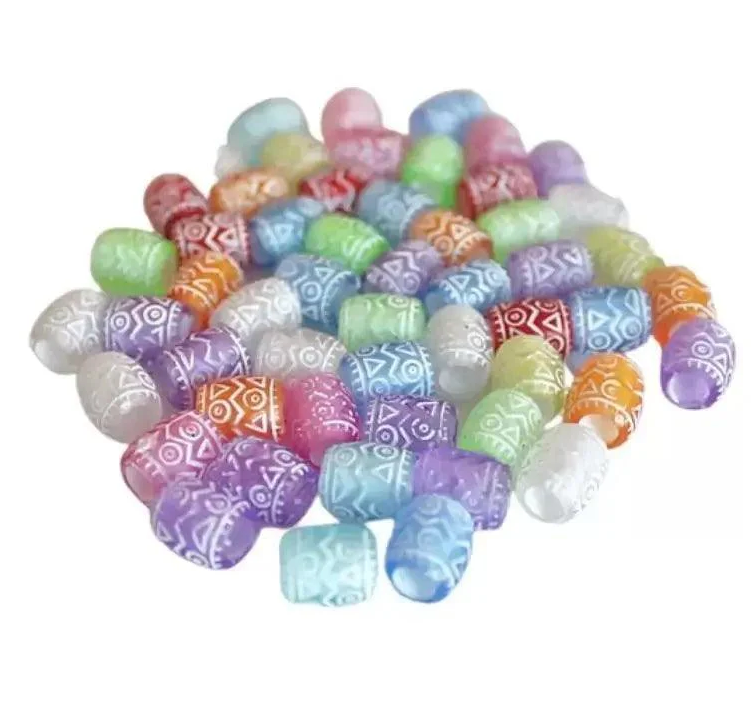
Colorful Acrylic Paracord Beads in Various Shapes and Sizes
The lightweight nature, smooth edges, and bright colors make acrylic ideal for kids’ projects (ages 6–12).
- Choose larger beads (12–15 мм) with bigger bore holes (6–8 мм).
- Avoid tiny beads (under 8 мм) with young children (choking hazard).
The Evolution: How We Got Here
Paracord crafting was historically dominated by heavy steel/titanium beads, which were expensive and limited in color. Acrylic emerged as the solution by offering:
- Dramatically lighter weight (80–90% lighter than metal).
- Unlimited colors and shapes.
- Affordability for beginners and bulk projects.
- Durability for everyday recreational use.
Common Mistakes That Ruin Your Project
- Mistake 1: Forcing oversized beads onto a paracord. The cost: Stretches and weakens the cord’s outer sheath, creating a weak spot that fails within 2–3 weeks of regular wear. Solution: Always use the correct bore size.
- Mistake 2: Mixing incompatible bead weights in wearable items. The cost: Weight imbalance (e.g., heavy metal next to light acrylic) causes the bracelet to shift constantly, becoming irritating. Solution: Keep bead weights consistent or use very small, light accent pieces.
- Mistake 3: Using translucent beads on outdoor gear without considering dirt visibility. The cost: Translucent beads show every particle of dirt inside the bore hole that cannot be cleaned, ruining the visual appeal. Solution: Use opaque colors for outdoor, gritty environments.
Acrylic vs. Metal vs. Wood: The Real Tradeoffs
| Feature | Acrylic | Metal (Steel/Titanium) | Wood |
| Weight (10mm bead) | 0.5g | 3–5g | 1–2g |
| Cost per bead | $0.10–0.30 | $1.00–3.00 | $0.20–0.50 |
| Color options | 100+ colors, translucent, glow | Limited (5–10 finishes) | Natural tones only |
| Durability (scratch) | Low-Medium | High | Medium |
| Water resistance | Excellent | Excellent (if coated) | Poor (swells, cracks) |
| Heat tolerance | Poor (softens at 160°F) | Excellent | Medium |
| Best use case | Decorative daily wear, kids’ projects | Tactical gear, heavy-duty tools | Natural aesthetic, low-moisture environments |
“Before threading any bead onto your finished project, run a cotton swab through the bore hole. If the cotton snags or shreds, that bead will eventually damage your paracord. Five seconds with a swab saves hours of rework.”
The Transparency Paradox: When Clear Isn’t Better
Clear and translucent acrylic beads are more prone to stress cracking than opaque ones. Applying constant radial pressure (by cinching knots) can cause tiny cracks to radiate from the bore hole over time (3–6 months). Opaque beads are the more durable choice for long-term use.
Sizing for Comfort: The Wrist Test
- Beads larger than 12 мм create pressure points when you bend your wrist.
- The sweet spot for all-day comfort is 8–10 мм beads.
- Position larger statement beads (15 мм+) on the top or sides of the bracelet, not the underside.
The Glow-in-the-Dark Reality Check
Glow-in-the-dark beads emit visible light for only about 30–45 minutes after a full charge. For actual emergency visibility, reflective paracord or beads with reflective coatings work far better.
Working with Micro and Nano Cord
Micro paracord (1.18 мм) requires beads with 2 мм bore holes. Nano cord (0.75 мм) requires seed beads. These small projects create delicate, jewelry-like pieces.
Storage and Organization
- Store in compartmented plastic organizers away from direct sunlight (prevents UV yellowing).
- Do not store different colors together in bulk (prevents dye transfer).
- Label containers with bore hole size.
Decorative Paracord Beads: Choosing the Right Style for Your Project
Decorative beads transform cord into personalized accessories:
- Edgy/Alternative: Skull and crossbones, dragons.
- Nature/Scouting: Animal shapes (wolves, eagles).
- Modern/Minimalist: Geometric patterns, abstract designs.
- Personalization: Letter beads.
The key is matching bead style to the item’s purpose.
Plastic Beads for Paracord: Understanding Material Composition
- Acrylic (PMMA): Most common. Best clarity for transparent beads, good scratch resistance.
- Resin (Polyester/Epoxy): Can be cast with embedded objects. Slightly softer than acrylic.
- ABS Plastic: Extremely impact-resistant. Usually opaque.
Paracord Bracelet Beads: Design Integration Strategies
- Centerpiece placement: A single larger bead (12–15 мм) at the center creates a focal point.
- Symmetrical spacing: Three to five smaller beads (8–10 мм) spaced evenly creates visual rhythm.
- Core strand threading: For cobra weave, thread beads onto the core strands before weaving to secure them.
Final Considerations
Acrylic paracord beads excel where weight, color variety, and cost matter more than maximum durability.
- Choose them for: Daily-wear accessories, kids’ projects, decorative items.
- Skip them for: Survival gear, load-bearing applications, or tools exposed to heat/extreme abuse.
Success depends on matching the material’s strengths to your project’s actual requirements.