
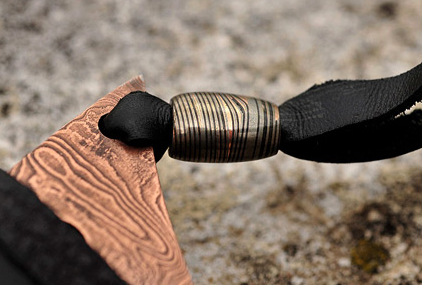

Damascus steel beads transform ordinary paracord projects into statement pieces. These small metal components combine ancient metalworking tradition with modern EDC functionality, offering both visual appeal and practical utility for knife lanyards, bracelets, and tactical accessories.
More about paracord beads:
What Exactly Is Damascus Steel in Paracord Beads?
Damascus steel beads are small metal components made from pattern-welded steel, featuring distinctive wavy or swirling patterns created by forge-welding multiple steel layers together. The pattern results from alternating layers of different steel alloys that react differently to acid etching, revealing the internal structure.
- Modern Damascus typically consists of 50-300 layers of steel. Common combinations include 1095 high-carbon steel paired with 15N20 nickel steel.
- The layering process creates structural integrity: alternating hard and soft layers provide both edge retention and flexibility.
- The visible pattern is the actual internal structure of the metal, meaning it won’t wear off with use. Each bead carries a unique pattern, making every piece genuinely one-of-a-kind.
Why Choose Damascus Beads Over Standard Stainless Options?
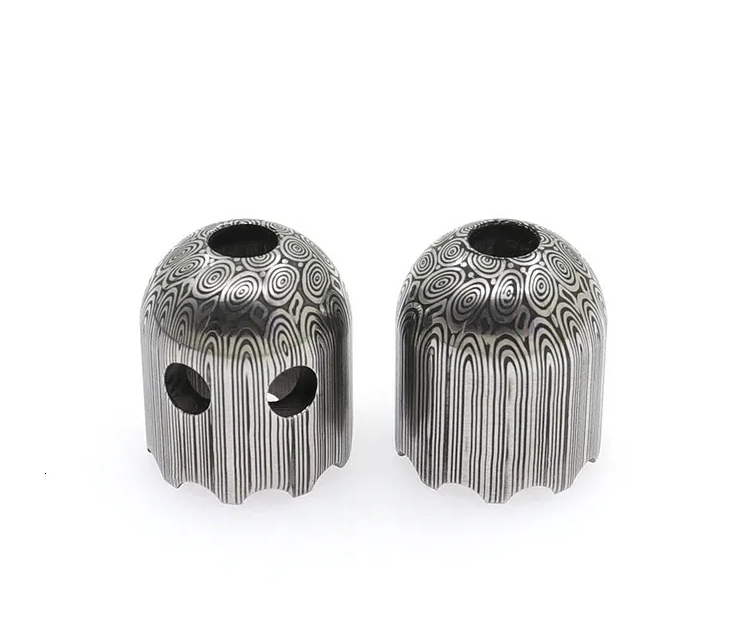
Damascus Steel Bead Bore Diameter and Edge Finish Detail
Damascus beads offer three distinct advantages over standard options: visual uniqueness, conversation value, and perceived quality that matches premium EDC gear.
- Visual Cohesion: For knife enthusiasts who carry custom folders or fixed blades with Damascus steel, matching beads create visual unity in their EDC setup.
- Tactile Grip: Damascus beads typically feature hand-finished surfaces with subtle texture variations that provide better grip than machine-polished stainless, which is useful when manipulating gear with wet or gloved hands.
Comparison: Damascus vs. Alternative Bead Materials
| Material | Pattern Uniqueness | Corrosion Resistance | Weight (10mm bead) | Typical Price Range | Best Use Case |
| Damascus Steel | Each piece unique | Moderate (requires maintenance) | $4-6 g | $15-$45 | Premium EDC, knife lanyards, statement pieces |
| Stainless Steel | None/uniform | Excellent | $3-5 g | $3-$12 | Daily carry, marine environments, budget builds |
| Titanium | None/uniform | Excellent | 2-3 g | $8-$25 | Ultralight setups, corrosive environments |
| Brass | None/develops patina | Poor (tarnishes) | 5-7 g | $4-15$ | Traditional aesthetic, indoor use |
How Damascus Patterns Form: The Engineering Behind the Aesthetic
The pattern emerges through a specific metallurgical process:
- A smith stacks alternating layers of two steel types (e.g., 1095 and 15N20).
- The layers are forge-welded at approximately 2,300°F, then folded and re-welded multiple times, increasing the layer count.
- After shaping and drilling, the smith applies an acid etchant (like ferric chloride).
- The high-carbon steel (1095) etches darker, appearing nearly black. The nickel-bearing steel (15N20) resists etching, staying bright silver. This contrast reveals the pattern.
Different manipulation techniques create distinct patterns:
- Ladder pattern: Straight, parallel lines.
- Twist pattern: Spiral effect from twisting the billet.
- Raindrop pattern: Circular formations from drilling divots.
- Random pattern: Chaotic, organic appearance.
Practical Applications: Where Damascus Steel Paracord Beads Excel
- Knife lanyard termination: Provides weight for quick extraction from pockets and visual balance with Damascus-bladed knives. Optimal range: 10-12 mm diameter.
- Flashlight lanyards: Added weight helps the light hang properly in a pocket.
- Zipper pulls: The textured surface and weight make operation easier, especially with gloves.
- Paracord bracelet focal points: Adds visual interest and structural support for clasp mechanisms.
- Keychain organization: Separates key groups on paracord keychains, providing tactile landmarks.
“Match your bead bore diameter precisely to your paracord. 550 paracord (4 mm) needs a 5-5.5 mm bore for smooth movement. Too tight, and the cord frays; too loose, and the bead slides around uselessly. Most commercial Damascus beads come with 5 mm bores, which works for single-strand 550 but not doubled cord.”
The Evolution: From Ancient Blades to Modern EDC Accessories
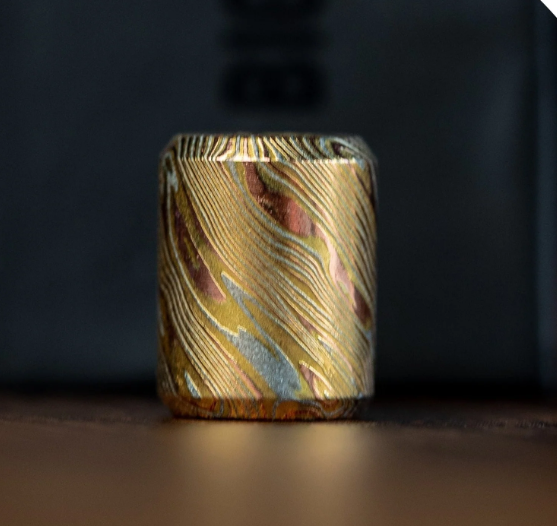
Damascus Steel Paracord Bead on Knife Lanyard EDC Setup
- The original Wootz steel (historical Damascus) knowledge was lost. Modern “Damascus” uses pattern welding—a technique similar to those practiced by Vikings
- The material was historically exclusive to knife blades. Production became viable for small components due to power hammers and hydraulic presses (reducing forge time) and the explosion of the EDC market in the 2010s.
- The “stainless Damascus” experiment proved difficult; most commercial stainless Damascus beads lack the crisp patterns of carbon steel versions due to forging challenges.
Critical Selection Factors for Damascus Paracord Beads: What to Examine Before Purchase
| Factor | Detail to Verify |
| Bore Diameter & Finish | 5 mm bore is standard for single-strand 550.Must have chamfered (rounded) edges to prevent cord abrasion. |
| Pattern Clarity & Etch Depth | Pattern should show clear contrast. Deep etching (texture you can feel) indicates proper treatment and longevity. |
| Surface Finish & Coating | Raw Damascus requires constant oiling. Most quality beads use Renaissance Wax, clear lacquer, or gun bluing for protection. Ask the maker what they used. |
| Weight & Balance | Match weight to function. 5-8 mm works well for folding knife lanyards; 10-15 mm for large fixed blades. |
| Maker Reputation & Steel Spec | Reputable makers specify the combination (e.g., “1095 Damascus, 200 layers”). Avoid vague descriptions. |
Maintenance Reality: The Corrosion Compromise
Choosing Damascus for paracord beads means accepting a maintenance requirement that stainless or titanium alternatives don’t demand.
Carbon steel Damascus will rust if neglected. The high-carbon layers are vulnerable to sweat, rain, or humidity.
Basic Maintenance:
- Cleaning: Wipe dry immediately after exposure to moisture. Use isopropyl alcohol for grime.
- Oiling: Apply a thin coat of mineral oil, gun oil, or knife oil every 2-4 weeks with regular use.
- Storage: Keep in low-humidity environments (dry cloth, plastic with desiccant). Avoid leather storage.
Surface rust can be removed with 0000-grade steel wool and oil if caught early. Deep rust pitting is permanent.
Common Mistakes That Ruin Damascus Beads
- Mistake 1: Using Damascus beads in marine or high-humidity environments. Salt and constant moisture cause rust to bloom within weeks, permanently ruining the pattern. Solution: Use stainless or titanium for water environments.
- Mistake 2: Forcing oversized paracord through undersized bores. Abrasion against the bore edges causes the paracord sheath to fray and the inner strands to break under load. Solution: Always use the correct bore size (e.g., 5 minimum for 550 cord).
- Mistake 3: Storing Damascus beads in leather pouches or sheaths. Leather retains moisture and releases tanning acids, accelerating corrosion even in storage. Solution: Store in dry cloth or plastic with desiccant.
Viewing Damascus from the Other Side: When Simpler Beats Premium
The strongest case against Damascus beads: They are functionally identical to materials that cost less and perform better in harsh conditions. The pattern provides zero functional advantage.
The value of Damascus is purely aesthetic and psychological. They transform functional items into personal statements. The key is honest self-assessment:
- If you prioritize pure utility, Damascus offers no rational benefit; get titanium.
- If you genuinely appreciate the aesthetics, will maintain the bead, and view your EDC as a curated collection, the premium is justified.
“Test your commitment before investing in Damascus. Buy one mid-priced bead ($20-25 range) and use it daily for a month. If you find yourself checking the pattern, maintaining it without resentment, and getting satisfaction from how it looks with your gear, then invest in more expensive pieces.”
Integrating Damascus Beads: Practical Project Applications
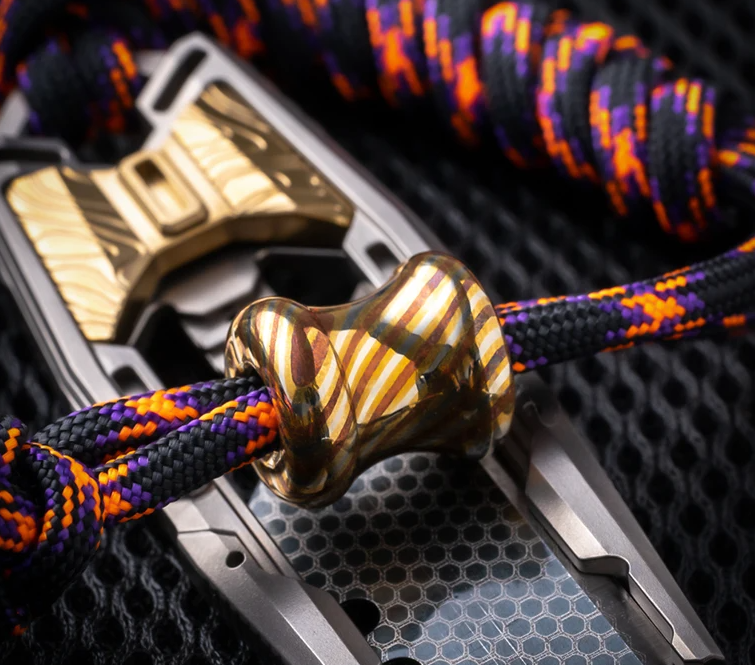
Damascus Steel Paracord Bead Pattern Detail Close-Up
- Knife lanyard construction: Use 18-24 inches of 550 cord. Thread the bead onto the working end and lock it with a terminal knot (diamond or monkey fist). The bead should slide freely but stop at the knot.
- Adjustable bracelet closure: Use two smaller beads (8 mm) on a continuous loop, threading the cord ends through both in opposite directions.This locks the bracelet length.
- Keychain separation system: Space multiple beads on a paracord keychain to create distinct sections for different key types, providing tactile landmarks.
- Zipper pull enhancement: Replace factory pulls with paracord loops terminated with a Damascus bead for easier operation, especially with gloves.
The Bottom Line: Are Damascus Steel Paracord Beads Worth Your Investment?
Damascus steel paracord beads are an aesthetic choice for users who value craftsmanship and visual coherence in their gear.
- Buy Damascus beads if: You own Damascus knives, appreciate metalworking artistry, and will maintain them properly.
- Skip them if: You prioritize pure utility, work in corrosive environments, or rotate gear frequently.
The premium cost pays for visual and material coherence, transforming functional gear into a personal, visually distinctive statement piece.