
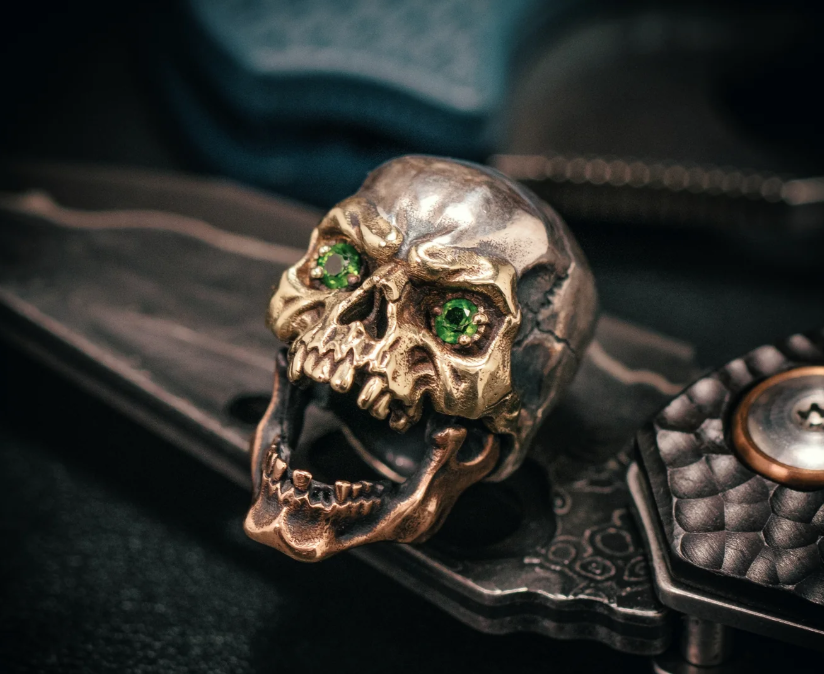

Skull paracord beads transform ordinary paracord projects into statement pieces with distinctive character. These small metal or polymer beads featuring skull designs serve as focal points on bracelets, knife lanyards, and keychains while adding weight and visual interest to your work.
More about paracord beads:
What Makes Skull Beads Different from Regular Paracord Beads?
Skull beads offer three-dimensional detailing and symbolic weight that flat beads can’t match. The raised features—eye sockets, teeth, cranial contours—create shadows and depth that catch light differently throughout the day. This dimensional quality makes your work instantly recognizable from across a room.
Standard round beads simply space out cord sections. Paracord beads skull designs become conversation starters. They signal membership in communities that value memento mori symbolism, tactical aesthetics, or simply bold design choices.

Skull Paracord Beads – Metal and Polymer Designs for Bracelets and Lanyards
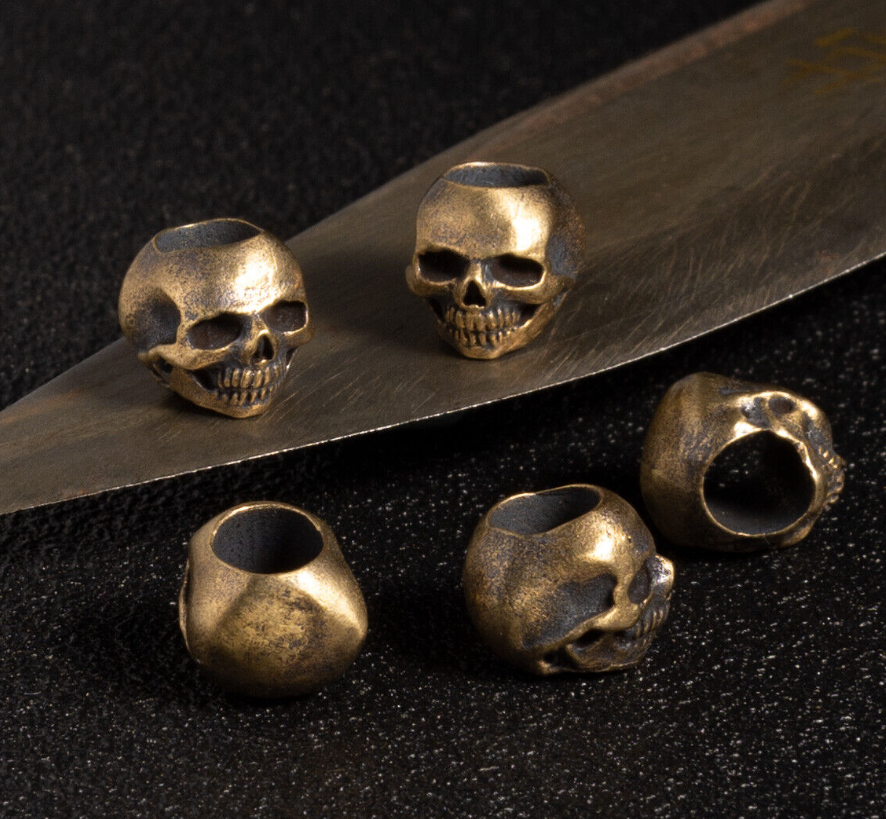
The hole diameter matters more with skull beads than simple spacers. Most skull beads accommodate 550 paracord (4 mm internal diameter), but verify before purchasing. Some miniature skulls work only with micro cord, while oversized pieces require gutted paracord or multiple strand threading.
How Did Skull Beads Become Standard in Paracord Work?
Fifteen years ago, paracord crafters relied on wooden beads borrowed from jewelry making or simple metal tubes from hardware stores. These functional spacers did their job but offered zero personality.
The tactical gear boom of the late 2000s changed everything. Military and law enforcement personnel started customizing their gear with cord lanyards. Someone—likely a metalworker with military connections—cast the first skull bead specifically for paracord. The design resonated immediately.
A brief experiment with resin-cast animal skulls (wolves, ravens, bears) emerged around 2012. These never gained traction. The human skull’s universal recognition and symbolic flexibility proved unbeatable. Animal skulls felt too specific, too limiting for diverse users.
Modern skull beads solve the core problem of their predecessors: they’re purpose-built for paracord dimensions. The bore diameter matches 550 cord perfectly. The external size balances visibility with wearability. The weight distribution prevents the bead from spinning or sliding excessively during wear.
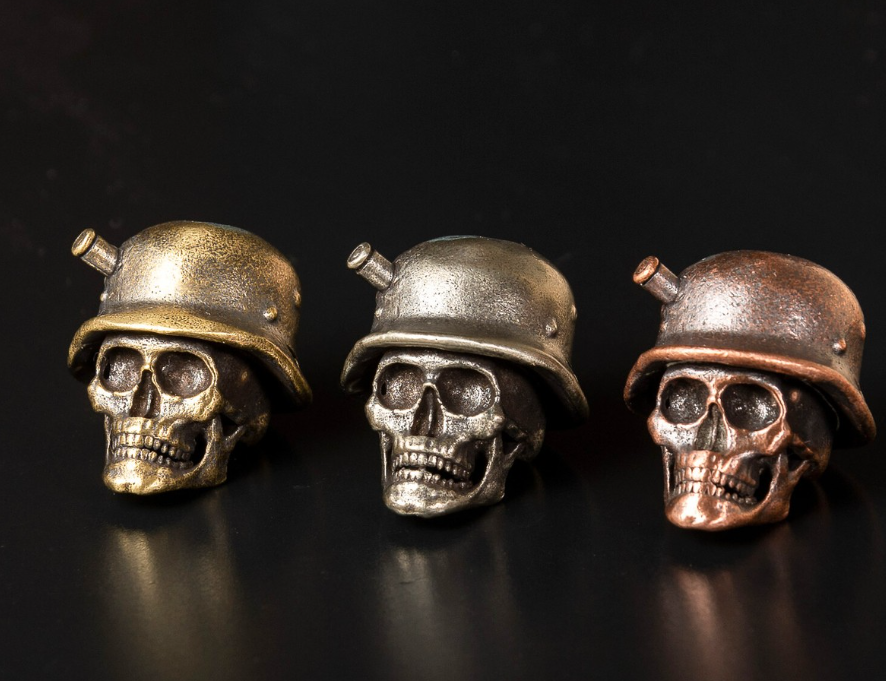
Metal Skull Beads for Paracord: Materials Comparison
- Metal skull beads for paracord deliver maximum durability and premium feel. Brass, stainless steel, and titanium versions withstand decades of daily wear without degradation. The weight adds satisfying heft to knife lanyards and creates momentum for zipper pulls.
- Brass develops a patina over time—some crafters love this aging character, others polish it away monthly. Stainless steel maintains its appearance indefinitely but costs more. Titanium offers the best strength-to-weight ratio for those who want presence without bulk.
- Polymer beads prioritize affordability and color variety. High-quality resin skulls capture impressive detail at one-third the metal price. They work perfectly for beginners testing designs before committing to expensive materials.
- The compromise? Polymer scratches more easily and can crack under impact. A dropped keychain might chip a resin skull’s jaw. That same fall barely marks metal.
- Bone beads occupy a niche category. Carved from cattle bone, these appeal to crafters seeking organic materials and traditional aesthetics. Each piece shows unique grain patterns. However, bone requires more maintenance—it can dry out and crack without occasional conditioning with mineral oil.
“Never use bone skull beads on items that see water exposure. I learned this the hard way when a client’s lanyard spent a week in humid jungle conditions. The bone absorbed moisture, swelled, and cracked the skull clean in half. Stick with stainless steel for anything that might get wet.”
Sizing: Finding the Right Scale for Your Project
Skull bead dimensions range from 8 mm micro skulls to 25 mm statement pieces. Your project type dictates the appropriate size.
- Bracelets work best with 12-15 mm skulls. This range provides clear visibility without creating pressure points against your wrist bone. Larger skulls look impressive but dig into your skin during normal hand movements.
- Knife lanyards accommodate 15-20 mm skulls comfortably. The lanyard hangs freely, so size restrictions disappear. Bigger skulls improve grip texture when pulling the knife from a sheath.
- Keychains and zipper pulls function optimally with 10-12 mm skulls. These items live in pockets and bags where oversized beads snag on fabric and create bulk.
Measure your paracord’s outer diameter before ordering. Standard 550 paracord measures 4 mm across. Your skull bead’s bore should measure 4.5-5 mm for smooth sliding with slight friction. Too tight and you’ll struggle to thread it. Too loose and it rattles around, wearing through the cord’s sheath.
Design Variations: Beyond the Basic Skull
Metal Skull Beads for Paracord – Material Comparison Guide
The classic anatomical skull dominates the market, but specialized designs serve specific aesthetics.
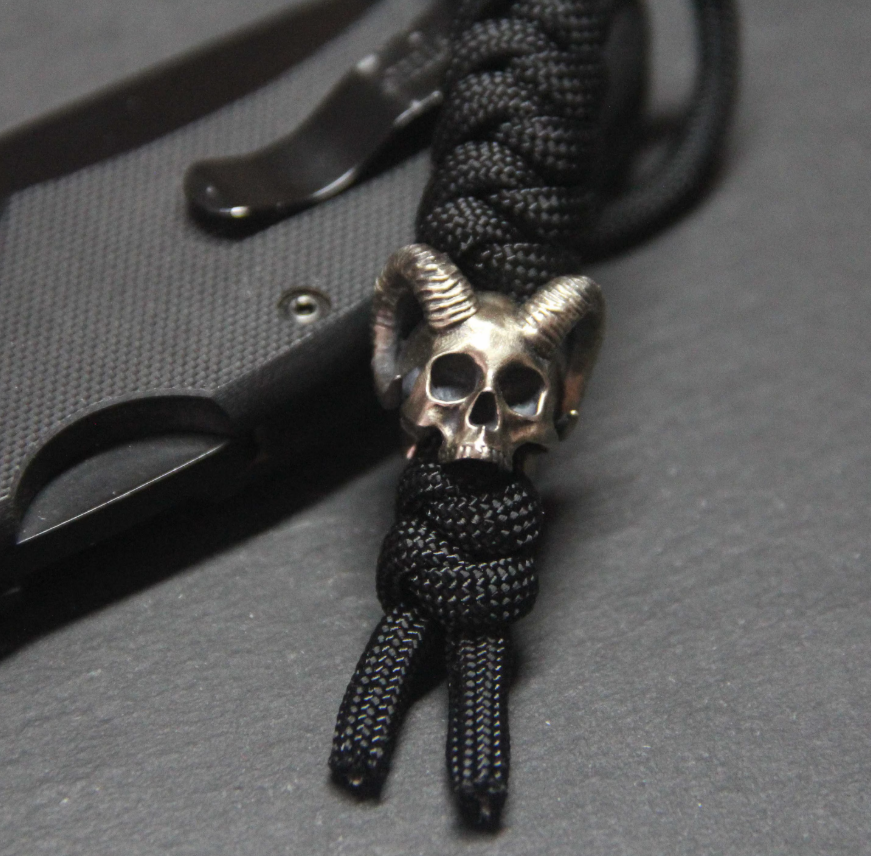
- Horned skulls add demon or Viking elements. Small horns protruding from the temples create an aggressive profile popular with motorcycle enthusiasts.
- Crowned skulls incorporate tiny crown details above the cranium. These appeal to crafters mixing memento mori themes with royalty symbolism.
- Cracked or battle-damaged skulls show fracture lines and missing bone sections. The weathered appearance suggests survival and resilience.
- Skull-and-crossbones combinations compress pirate imagery into bead form. The crossed bones typically sit behind the skull in relief.
- Sugar skull designs bring Day of the Dead aesthetics with floral patterns and decorative elements carved into the bone structure. These work particularly well in polymer where color fills can highlight the intricate details.
Think of design selection like choosing between a plain white t-shirt and one with graphics. Both serve the same function, but they broadcast different messages about the wearer.
| Feature | Standard Skull | Horned Skull | Sugar Skull | Cracked Skull |
| Best For | Universal appeal | Aggressive aesthetics | Colorful projects | Weathered/vintage look |
| Material Options | All | Primarily metal | Polymer preferred | All |
| Detail Level | Moderate | High (horns add complexity) | Very high | Moderate |
| Price Range | $3-15 | $8-20 | $4-12 | $5-18 |
| Threading Difficulty | Easy | Moderate (horn clearance) | Easy | Easy |
Three Critical Mistakes That Ruin Skull Bead Projects
Mistake 1: Ignoring Bore Finish
Many crafters grab the first skull bead that fits their cord diameter. They thread it onto their paracord and start weaving.
- Why they do it: The bead slides on during the test fit, so it seems fine.
- The cost: Rough internal bores act like sandpaper on paracord’s nylon sheath. Every time the bead shifts during wear, it abrades the cord. A bracelet that should last three years fails in eight months when the cord frays through at the bead location. You lose 70% of the item’s lifespan because you didn’t spend fifteen seconds checking bore smoothness. Run your finger inside the hole before purchasing. It should feel glass-smooth, not gritty or sharp.
Mistake 2: Positioning Skull Beads at Stress Points
Beginners often place skull beads at bracelet closure points or where lanyards attach to knife handles—exactly where the cord experiences maximum tension and flexing.
- Why they do it: These locations seem like natural focal points where the skull will be most visible.
- The cost: Paracord flexes. Rigid beads don’t. When you position a skull at a high-stress junction, every hand movement forces the cord to bend sharply against the bead’s edge. This creates a failure point. The cord develops a permanent kink, then individual strands start breaking. A punisher lanyard bead rated for 550 pounds might fail at 200 pounds because the skull bead created a stress concentration. You’ve turned a safety item into a liability. Position skull beads in straight sections where the cord doesn’t bend repeatedly.
Mistake 3: Mixing Incompatible Metals
Crafters sometimes combine brass skull beads with stainless steel shackles or titanium hardware on the same project.
- Why they do it: They’re matching colors or using whatever materials they have available.
- The cost: Different metals in contact create galvanic corrosion when exposed to moisture (sweat, rain, humidity). The more reactive metal—usually brass—corrodes accelerated. Green oxidation appears within weeks. The skull’s details fill with corrosion products, obscuring the design you paid for. In extreme cases, the corrosion can weaken the bead structurally. Stick with one metal type per project, or separate different metals with cord sections that prevent direct contact.
Threading Techniques: Getting the Skull On and Keeping It There
Paracord Skull Bead Sizing Chart – Choosing the Right Dimensions
- The basic slide method works for most applications. Melt your paracord end into a point using a lighter. Let it cool for three seconds until firm but still slightly pliable. Push the pointed end through the skull’s bore. The melted tip acts as a built-in needle.
- The gutted cord technique solves problems with tight-bore skulls. Remove the inner strands from a 6-inch paracord section, leaving just the nylon sheath. Thread this hollow sheath through the skull, then use it as a pull-through to drag your full cord (with inner strands intact) through the bore.
- Permanent positioning requires a stopper knot on each side of the skull. A simple overhand knot works, but it’s bulky. The snake knot provides a cleaner look—it builds up gradually, letting you position it precisely against the skull’s edge.
For sliding beads that you want to adjust occasionally, leave 2-3 mm clearance between the skull and your stopper knots. This allows movement without letting the bead slide freely during normal wear.
Paracord Bracelet with Skull Beads: Integration Techniques
- Survival bracelets typically feature one central skull bead as a focal point. Position it opposite the clasp for visual balance. The skull sits on top of your wrist when worn, making it the first thing people notice.
- Some advanced designs incorporate two smaller skulls flanking a central clasp. This symmetrical approach works well for wider bracelets (1+ inch) where a single bead would look lost.
- Knife lanyards benefit from terminal skull beads—placed at the very end where they add weight for better grip and throwing momentum. The skull also prevents the lanyard from slipping through your fingers during extraction.
- A three-bead lanyard design places skulls at the top (near knife attachment), middle, and bottom. This creates visual rhythm and adds multiple grip texture points.
- Keychains and zipper pulls work best with single small skulls positioned 1-2 inches from the attachment point. This location keeps the skull visible while preventing it from banging against the lock or zipper mechanism during use.
- Monkey fist designs can incorporate a skull bead as the core weight instead of traditional ball bearings. This requires careful sizing—the skull must be small enough to wrap completely but large enough to create proper tension in the outer wraps.
The Strongest Argument Against Skull Beads
Some experienced paracord crafters argue that skull beads compromise the fundamental purpose of paracord gear: emergency utility.
Their point has merit. In a genuine survival situation, you need to unravel your bracelet quickly to access the cord. Skull beads slow this process. You must slide them off or cut the cord on both sides, wasting 4-6 inches of usable material. Those inches might be the difference between a shelter guy-line that holds and one that fails.
For military personnel, first responders, or serious wilderness users whose paracord gear serves as actual emergency equipment, this argument holds weight. A plain paracord bracelet without any beads deploys fastest.
However, for the vast majority of paracord enthusiasts—those who value the aesthetic and symbolic aspects alongside the theoretical utility—this compromise is acceptable. Your EDC bracelet is more likely to serve as a conversation piece or personal talisman than emergency cordage. The 0.01% chance you’ll need to deploy it in a life-or-death situation doesn’t outweigh the daily satisfaction of wearing something that reflects your style.
The practical middle ground: maintain one pure utility piece (plain paracord, no beads, quick-release clasp) in your vehicle or pack. Wear your skull-adorned pieces for daily carry where they serve their primary purpose—personal expression.
“I teach students to think of beaded paracord as ‘tier two’ gear. Your tier one emergency cord stays in your pack, untouched and ready. Your beaded bracelet is tier two—it’ll work in a pinch, but you accept the slight deployment delay as the price of wearing something you actually enjoy looking at every day.”
Maintenance and Longevity
Metal skull beads require minimal maintenance. Wipe them with a dry cloth after exposure to salt water or excessive sweat. This prevents mineral deposits from building up in the detailed areas.
Brass beads that develop unwanted patina respond well to a quick polish with a jewelry cloth. For stubborn oxidation, a paste of baking soda and water applied with a soft toothbrush cleans the details without scratching.
Polymer beads need protection from prolonged UV exposure. Direct sunlight degrades some resins over months, causing color fading and surface chalking. This matters for outdoor gear left in vehicles or hanging in sunny windows.
The paracord itself typically fails before quality skull beads. Nylon degrades from UV exposure and abrasion. Expect to replace the cord every 2-3 years on daily-wear items while reusing the skull beads in new projects.
Sourcing Quality Skull Beads
- Reputable paracord suppliers offer skull beads with verified bore dimensions and material specifications. Look for sellers who provide actual measurements rather than vague “fits 550 cord” claims.
- Etsy hosts numerous small-scale metalworkers who cast custom skull designs. These one-person operations often produce higher detail levels than mass-market beads, though prices run 30-50% higher.
- Import marketplaces offer incredibly cheap skull beads—sometimes $0.50 each. Quality varies wildly. The main risks are rough bores that damage cord and plating that wears off within weeks, revealing base metal underneath.
For your first projects, mid-range beads ($5-8 each) provide the best balance of quality and cost while you develop your skills and preferences.
Paracord Skull Keychain and Other Creative Applications
A paracord skull keychain offers one of the simplest entry points into skull bead crafting. The compact format requires minimal cord—typically 3-4 feet—making it perfect for testing new weaving patterns or bead placements without major material investment.
- EDC applications extend beyond standard keychains. Attach skull-adorned paracord to flashlights, multi-tools, or pocket knives for improved grip and quick identification in bags or pockets. The textured surface of the skull provides tactile feedback, letting you identify tools by touch alone.
- Decorative uses include curtain tiebacks, camera strap accents, and backpack zipper pulls. These applications prioritize aesthetics over utility, allowing for larger, more ornate skull designs that might prove impractical on wearable items.
- Pet collars represent an emerging application. Small to medium skull beads (10-12 mm) add personality to paracord dog collars without adding excessive weight. Ensure the skull has no sharp edges that could irritate your pet’s neck.
Paracord Skull Bracelet: Style Variations
Skull Paracord Bead Design Variations – Horned, Crowned, and Sugar Skull Options
The paracord skull bracelet remains the most popular application for skull beads, with dozens of weaving patterns accommodating different aesthetic preferences.
- Cobra weave bracelets provide the classic foundation. A single centered skull bead interrupts the pattern, creating a focal point. The tight weave on either side frames the skull, drawing the eye naturally to the design.
- King cobra variations use a double-layer weave that creates more bulk. This style supports two smaller skull beads positioned symmetrically, or one larger statement piece that won’t look oversized against the wider band.
- Fishtail patterns create a flatter, more flexible bracelet. Skull beads in fishtail designs sit closer to the wrist, making them ideal for workplace environments where protruding elements might catch on equipment or clothing.
- Trilobite weaves offer maximum complexity and visual interest. The intricate pattern complements detailed skull designs—both elements reward close inspection and showcase craftsmanship.
Color selection amplifies the skull’s impact. Black paracord creates a monochromatic tactical look. Contrasting colors (red and black, white and black) make the skull pop visually. Camo patterns appeal to outdoor enthusiasts and military personnel.
Where Skull Beads Take Your Work
Skull paracord beads transform functional cord into personal artifacts. They mark your work as intentional, considered, and aligned with specific aesthetic values.
The technical considerations—bore diameter, material choice, positioning—matter because they determine whether your piece lasts months or years. The design selection matters because it determines whether the piece feels authentically yours or like something you copied from a tutorial.
Start with one quality skull bead on a simple project. Learn how it affects the cord’s drape and the piece’s balance. Then expand your collection based on what works for your specific applications and style preferences.
Your paracord work already demonstrates practical skill. Skull beads add the layer of personal expression that separates craft from art.