
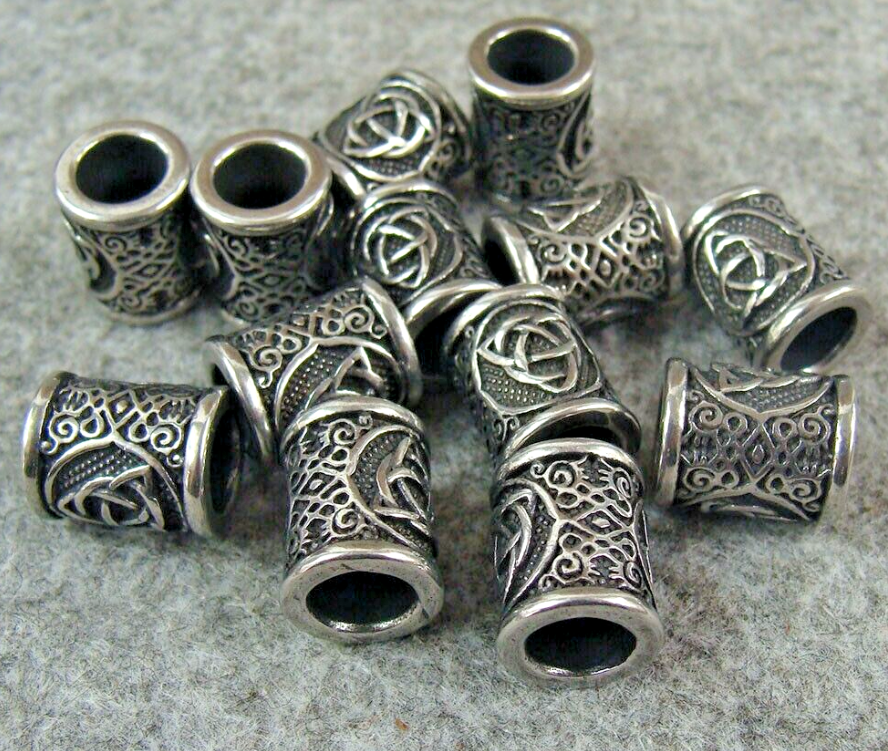

Stainless steel beads for paracord combine corrosion resistance, durability, and weight in a package that works for most outdoor and EDC projects. They’re heavier than titanium, cheaper than brass, and won’t rust when wet. If you’re building knife lanyards, bracelets, or zipper pulls that need to handle sweat, rain, and daily abuse, stainless is the default choice for good reason.
More about paracord beads:
What Makes Stainless Steel Different from Other Bead Materials?
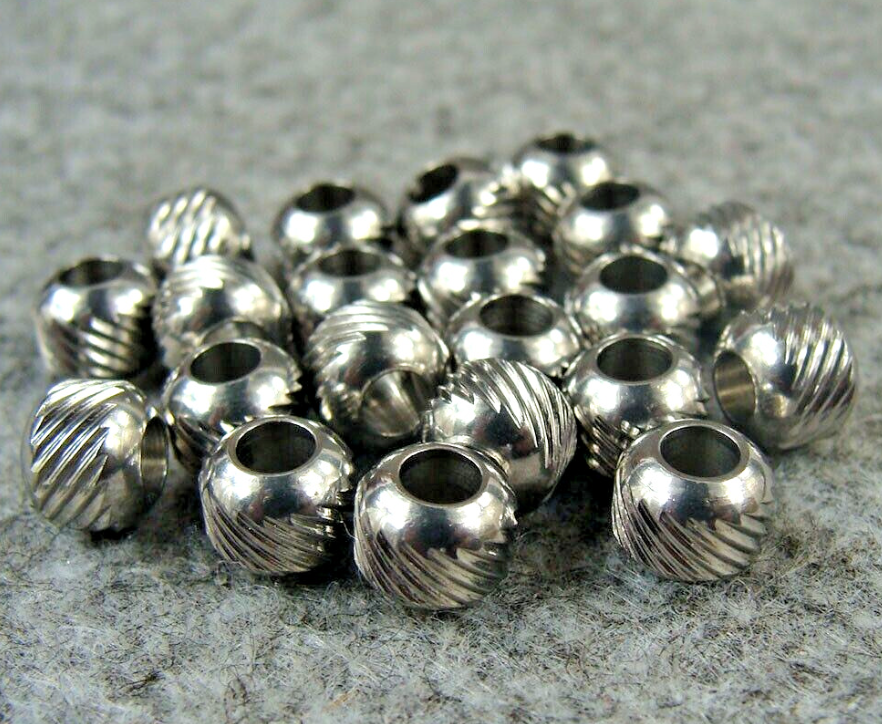
Stainless Steel Paracord Beads – Different Sizes and Finishes for EDC Projects
Stainless steel sits in the middle of the material spectrum: tougher than aluminum, more affordable than titanium, and more corrosion-resistant than brass or copper.
The key advantage is chromium content. Stainless steel contains at least 10.5% chromium, which forms a passive oxide layer on the surface. This layer self-heals when scratched, preventing rust. For paracord projects exposed to moisture—whether from sweat during a hike or rain on your EDC gear—this matters more than you’d think.
Weight is the tradeoff. A 10mm stainless bead weighs roughly 3-4 grams, compared to 1.5 grams for titanium. On a knife lanyard, that extra weight helps with deployment. On a bracelet worn all day, it can feel bulky. The choice depends on your use case.
Stainless also takes surface treatments well. You’ll find beads with brushed, polished, or bead-blasted finishes. Each affects grip and appearance differently.
How Did Paracord Beads Evolve into What We Use Today?
Fifteen years ago, most people making paracord gear used whatever they could find: fishing weights, hardware store washers, or cheap plastic beads. The problem was obvious—washers had sharp edges that cut through cord, plastic cracked in cold weather, and fishing weights looked terrible.
- Early adopters tried wooden beads. They looked good initially but absorbed moisture, swelled, and eventually split the paracord from the inside.
- Some experimented with carved bone or antler, which worked but required specialized tools and skills most people didn’t have.
The shift came when small machine shops started producing purpose-made beads with chamfered holes and precise inner diameters. These eliminated the two biggest problems: cord abrasion and fit inconsistency. Stainless steel became the standard because it was machinable, affordable at scale, and performed reliably across temperature extremes.
Today’s beads are engineered specifically for paracord. The hole diameter matches cord thickness, edges are rounded to prevent wear, and surface finishes are chosen for function, not just looks.
Which Grade of Stainless Steel Should You Choose?
Most paracord beads use either 304 or 316 stainless steel. The difference matters if you’re near saltwater.
- 304 stainless (also called 18-8) contains 18% chromium and 8% nickel. It handles freshwater, sweat, and rain without issue. For hiking, camping, or everyday carry in normal conditions, 304 is sufficient and costs less.
- 316 stainless adds 2-3% molybdenum, which dramatically improves resistance to chlorides and salt. If you’re fishing, kayaking in the ocean, or live in a coastal area, 316 prevents pitting corrosion that 304 can’t handle. The price premium is $20-30, but the bead won’t develop rust spots after a season of saltwater exposure.
Some manufacturers don’t specify the grade. If the listing just says “stainless steel” without a number, assume it’s 304. For most users, that’s fine. If you need 316, the seller will advertise it prominently because it’s a selling point.
“I’ve seen 304 beads on fishing knife lanyards develop surface rust after six months of saltwater use. It doesn’t compromise strength, but it looks bad and stains the paracord. For anything that touches salt regularly, spend the extra few dollars on 316. For everything else, save your money.”
What Bead Size and Hole Diameter Work with Your Paracord?
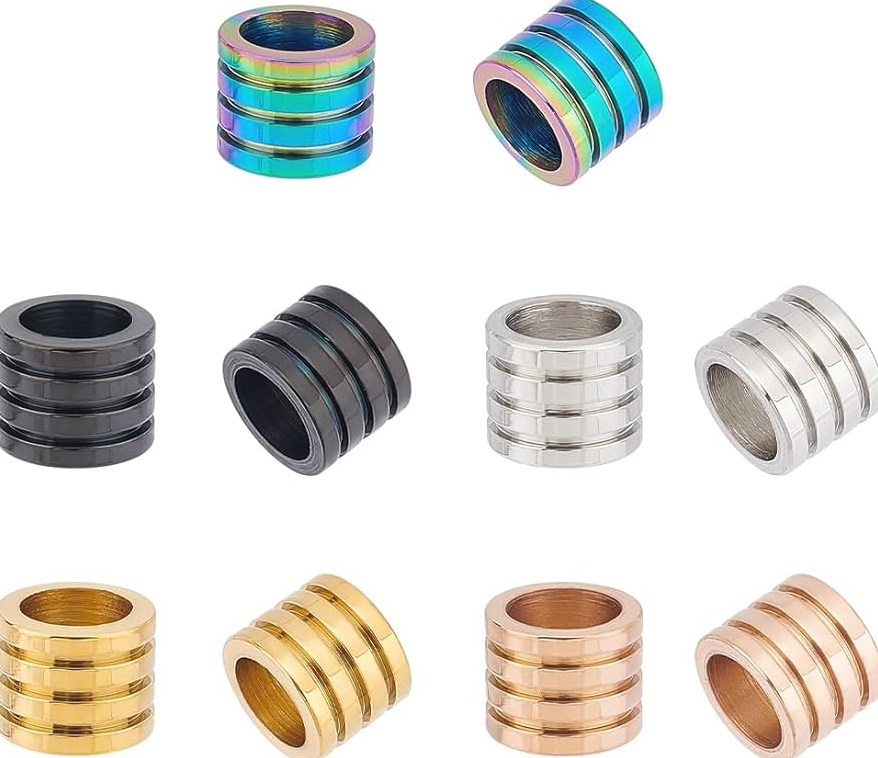
Stainless Steel Paracord Beads on Knife Lanyard – Tactical EDC Setup
Paracord comes in different thicknesses, and bead holes must match. The most common sizes:
- 550 paracord (7-strand): 4 mm outer diameter. Needs a 4.5-5 mm hole for easy threading, 4 mm for a snug fit.
- 425 paracord (4-strand): 3 mm outer diameter. Needs a 3.5-4 mm hole.
- 275 paracord (micro cord): 2 mm outer diameter. Needs a 2.5-3mm hole.
A hole that’s too small won’t thread. A hole that’s too large lets the bead slide freely, which defeats the purpose in most applications.
Bead Outer Diameter (Size)
Bead outer diameter affects both appearance and function. Common sizes:
- 8-10 mm: Ideal for thin bracelets and zipper pulls.
- 12-15 mm: Standard for EDC and tactical gear.
- 18-20 mm: Statement pieces, add weight for quicker knife deployment.
Heavier beads (15 mm and up) work best as lanyard terminators, as the weight aids in grip and deployment. Lighter beads (8-10 mm) are better for decorative spacing on survival bracelets.
Stainless Steel Lanyard Beads vs. Titanium vs. Brass: The Real Tradeoffs
Choosing between materials means understanding what you’re gaining and giving up.
- Stainless steel offers the best balance of cost, durability, and corrosion resistance. The main compromise: weight.A 12 mm stainless bead weighs about 5 grams.
- Titanium beads weigh 40% less (around 3 grams) for the same size, but the tradeoff is cost—titanium is 3-4 times more expensive than stainless.
- Brass and copper develop a patina over time. The compromise: they require maintenance (tarnish, can stain paracord) and are softer (dent easily).
| Material | Weight (12mm bead) | Corrosion Resistance | Cost (relative) | Best Use Case |
| 304 Stainless | 5 g | Excellent (freshwater) | $1 | General EDC, hiking, camping |
| 316 Stainless | 5 g | Excellent (saltwater) | $1.3 | Fishing, marine environments |
| Titanium | 3 g | Excellent | $3-4 | Lightweight bracelets, minimalist EDC |
| Brass | 7 g | Fair (tarnishes) | $1.5 | Decorative projects, vintage aesthetic |
| Copper | 7.5 g | Fair (patinas heavily) | $1.2 | Decorative projects, antimicrobial properties |
What Surface Finish Should You Look For?
Surface finish affects both grip and appearance.
- Polished/mirror finish: Looks clean, reflects light. Downside: Shows every fingerprint and scratch (high-maintenance for EDC).
- Brushed/satin finish: Hides minor scratches, provides moderate grip. Best use: Practical choice for working gear; disguises wear.
- Bead-blasted/tumbled finish: Offers the best grip and hides wear completely. Best use: Knife lanyards where grip is crucial. Tradeoff: Looks less refined.
Some beads use PVD (Physical Vapor Deposition) coatings for color (black, gold). This hard ceramic layer resists scratches better than bare steel and won’t fade or chip.
Three Common Mistakes That Ruin Paracord Bead Projects
Mistake 1: Buying Beads with Sharp Hole Edges
Many cheap beads have holes that are simply drilled without chamfering (rounding) the edges. The sharp metal edge acts like a knife blade on your paracord at stress points.
The cost: Your paracord will fray and fail at the bead entry point, usually within 2-3 months of regular use. Quality beads with chamfered holes last years under the same conditions.
Mistake 2: Ignoring Bead Weight on Multi-Bead Bracelets
Adding multiple heavy stainless beads to a bracelet seems like a good way to add visual interest, but weight accumulates fast.
The cost: Five 12 mm stainless beads add 25 grams to your wrist, which can become uncomfortable after a few hours, turning a daily-wear bracelet into an occasional accessory.
Solution: Limit stainless beads to 1-2 accents, or use smaller (8 mm) or lighter (titanium) beads.
Mistake 3: Mixing Dissimilar Metals in Wet Conditions
Combining stainless steel beads with brass or copper hardware on the same project looks great initially, but creates an issue when wet.
The cost: When dissimilar metals touch in the presence of moisture (sweat, rain), galvanic corrosion occurs. The less noble metal (brass or copper) corrodes faster and stains your paracord green or brown.
Solution: Keep mixed metals separated by at least an inch of paracord, or stick to one metal type for wet-use projects.
How to Use Metal Beads for Paracord in Different Project Types
- Knife Lanyards: You want weight and grip. Use a 12-15 mm bead with a bead-blasted finish. The weight aids deployment momentum. Lock the bead in position with an overhand knot or diamond knot 2-3 inches from the knife.
- EDC Zipper Pulls and Keychains: Use smaller beads (8-10 mm) to avoid bulk. For keychains, focus more on decorative patterns.
- Paracord Bracelets: Beads are for decoration and adjustment. Limit to 1-2 stainless beads for comfort. For sliding adjustment, the hole needs to be 1 mm larger than the cord diameter.
- Flashlight and Tool Lanyards: Use 10-12 mm beads. Focus on grip texture (bead-blasted/brushed) for wet or gloved hands.
The Strongest Argument Against Stainless Steel Beads
The main case against stainless steel is weight, particularly for users who prioritize ultralight gear. For backpackers or those building a minimalist EDC kit, the weight of stainless steel can feel excessive compared to titanium.
- This argument is strongest for: ultralight backpacking or all-day office wear bracelets.
- This argument is weakest for: knife lanyards (where weight aids deployment) or fishing gear (where weight helps tools sink).
For the majority of paracord projects, the durability and cost advantages of stainless outweigh the minimal weight savings of switching to titanium.
What to Check Before You Buy Paracord Beads Stainless Steel
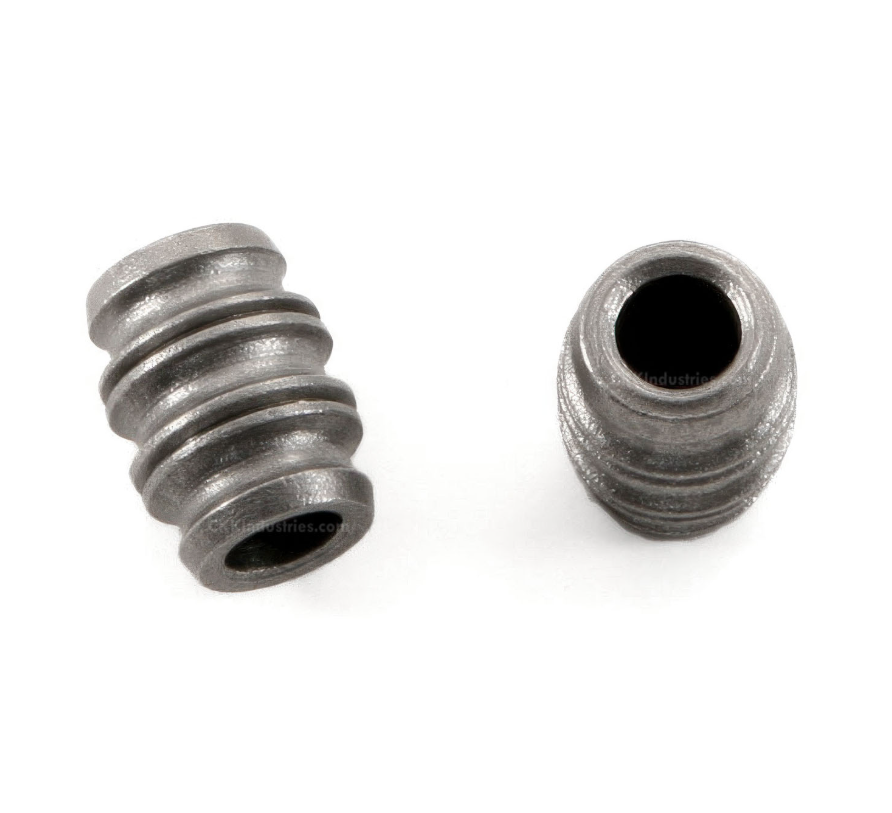
Stainless Steel Beads for Paracord Bracelets – Proper Sizing and Threading
Before ordering stainless beads, verify these specifications:
- Hole diameter: Measure your paracord. Add 0.5 mm for a snug fit, 1 mm for a sliding fit.
- Chamfered edges: Look for photos showing rounded hole edges or check reviews for smooth threading.
- Steel grade: Assume 304 if not specified. Only pay extra for 316 if you need saltwater resistance.
- Weight: Match bead weight to your project type.
- Finish quality: Check reviews for defects or uneven finishes.
“The cheapest beads are almost never worth it. I’ve seen students buy bulk packs of ‘stainless’ beads that were actually plated mild steel. They rusted within weeks. Stick with established makers who list specifications. The price difference is usually $1-2 per bead, but the quality gap is massive.”
Stainless Steel Beads: The Practical Default
For most paracord projects, stainless steel beads offer the best combination of durability, cost, and corrosion resistance. They are heavier than titanium but cost less, and are tougher than brass while requiring zero maintenance.
- Choose 304 for general use, 316 for saltwater.
- Match hole diameter to your cord thickness.
- Pick a finish based on grip needs.
- Avoid sharp edges and ultra-cheap options.
The right bead disappears into your project—it does its job without drawing attention or requiring maintenance. That’s exactly what stainless steel delivers.