


Beads on lanyards aren’t just decoration. They’re personal statements, cultural markers, and conversation starters that transform everyday carry (EDC) items into extensions of identity. Understanding their symbolism helps you choose pieces that genuinely reflect who you are.
More about paracord beads:
Why Do EDC Enthusiasts Care About Bead Symbolism?
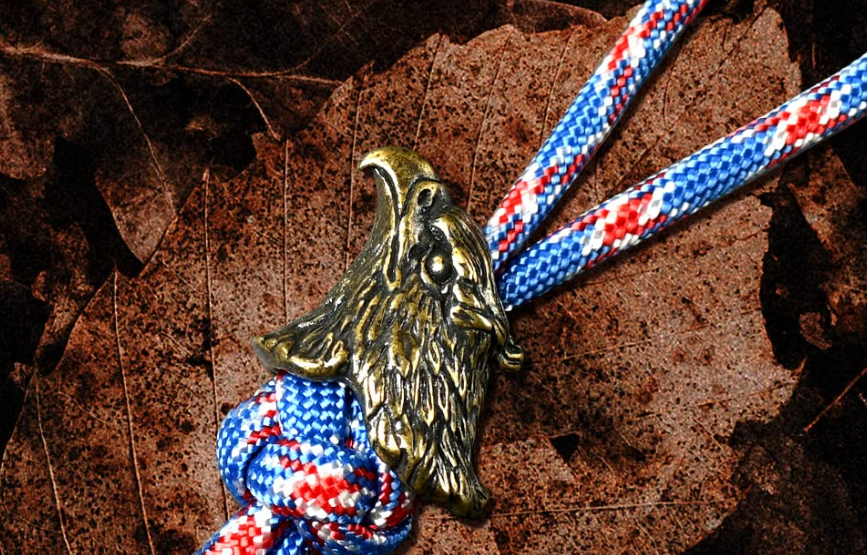
Symbolic EDC Beads: Skulls, Runes, and Geometric Patterns on Paracord Lanyards
EDC culture values intentionality. Every item in your pocket serves a purpose, and beads are no exception. They communicate:
- Values: A skull bead signals memento mori (remember mortality).
- Interests: A rune bead indicates interest in Norse heritage.
- Affiliations: Association with military or historical groups.
This practice connects modern carriers to ancient traditions where warriors, traders, and craftspeople adorned tools with symbolic objects for millennia.
What’s the Real History Behind Skull Beads?
Skull imagery is ancient, appearing in Paleolithic, Egyptian, and Aztec cultures.
- Medieval Europe: Used in memento mori art, the skull served as a philosophical reminder that mortality helps prioritize life.
- 1700s Pirates: The skull-and-crossbones flag (Jolly Roger) was used for psychological warfare, signaling ruthlessness.
- 20th Century Military: Units (SS Totenkopf, British SAS) adopted skull insignia to represent acceptance of mortality in high-risk operations.
Today’s EDC skull beads draw from these traditions, connecting the wearer to thousands of years of symbolic history while adding practical grip texture to a lanyard.
Paracord Beads Symbolism: How Runes Became Popular in EDC Culture
Runes originated as the Elder Futhark alphabet (150-800 CE) used by Germanic tribes. Each rune represented both a sound and a concept (e.g., Fehu = cattle/wealth, Algiz = protection).
- Viking Age: Runes spread across Europe, carved on weapons and memorial stones.
- Modern Revival: Interest was renewed by Scandinavian heritage movements, fantasy literature, and metalworking aesthetics.
Modern rune beads feature single characters chosen for personal meaning: Algiz (ᛉ) for protection, Raido (ᚱ) for journey.
Choosing runes requires cultural awareness. Research each symbol’s history before wearing it, as some carry baggage from 20th-century misuse.
Evolution of EDC Lanyard Beads: How Did We Get Here?

Skull Bead Symbolism: Memento Mori Philosophy in Everyday Carry
- 15+ Years Ago: Lanyards were purely functional paracord loops for knife extraction (no decoration).
- Early Adopters: Experimented with crude materials (heat-shrink tubing, fishing swivels).
- 2010-2012 Breakthrough: Custom knifemakers (like Peter Atwood) began machining small, purpose-designed titanium and bronze beads. These added weight and grip texture.
- Today: CNC machining and direct-to-customer channels (Etsy, Instagram) offer hundreds of detailed, purpose-built designs.
Lanyard Bead Meanings: What Different Materials Actually Communicate
| Material | Practical Properties | Cultural Association/Message |
| Titanium | Lightweight, corrosion-resistant | Technical sophistication, performance optimization |
| Bronze/Brass | Heavy, develops patina | Historical metalworking traditions, ancient civilizations |
| Stainless Steel | Durable, maintenance-free | Practicality, hard-use, industrial environment |
| Stone (Obsidian, Jade) | Unique variation, fragile | Earth-based spirituality, valuing beauty over pure utility |
| Wood | Warmth, texture | Organic aesthetics, traditional craftsmanship |
| Bone/Horn | Traditional, organic | Bushcraft, primitive skills, complex cultural weight |
Common Mistakes That Ruin Your Bead’s Meaning
| Mistake | Why it Fails | The Cost |
| Mixing Incompatible Symbols | Combining symbols with contradictory or historically opposed meanings (e.g., Celtic cross and Norse runes). | Loss of credibility; the result reads as cultural appropriation or ignorance. |
| Choosing Symbols Only on Aesthetics | Buying a symbol (e.g., Vegvisir) just because it looks “Viking,” without researching its historical origin. | Reveals historical ignorance (Vegvisir is 1860s, not Viking Age); you can’t genuinely explain your choice. |
| Overloading Your Lanyard | Stringing together too many large, meaningful symbols. | Visual clutter destroys symbolic impact. Practically, it adds bulk/weight, making the tool a burden (items exceeding 15% accessory weight are often abandoned). |
Geometric Patterns: The Underrated Symbol Category
Geometric patterns offer rich symbolism with less cultural baggage than specific mythologies:
- Sacred Geometry (Flower of Life): Represents universal concepts like interconnection and balance.
- Celtic Knots: Continuous line symbolizes eternity and interconnection (avoids religious connotations of crosses).
- Modern Minimalist Geometry: Appeals to contemporary aesthetics, avoiding historical weight entirely.
What Symbols Work Best for Different EDC Styles?
| EDC Style | Suggested Symbols | Materials |
| Tactical/Military | Skull beads, Spartan helmets, simple geometric patterns | Titanium, Stainless Steel |
| Bushcraft/Outdoors | Animal totems, Tree-of-Life, simple protective runes (Algiz) | Wood, Bone, Stone |
| Minimalist | Single small bead, clean geometry, no symbol | Polished Titanium, Blackened Steel |
| Heritage/Cultural | Specific runes, Celtic knots, kanji (if tied to genuine ancestry) | Bronze, Brass |
| Maker/Craftsman | Tool-related symbols (hammers, gears), maker’s marks | Elaborately engraved Brass or Steel |
The Strongest Argument Against Symbolic Beads
Some argue that symbolic beads contradict core EDC principles: function, not fashion. Decorative beads add weight, bulk, and cost while providing zero functional benefit, hindering quick deployment (especially for military/LEO).
Counterpoint (Psychological Dimension): Personalized objects receive better care and more consistent use. For civilian EDC, the functional cost of a 15-gram bead is negligible compared to the psychological benefit (increased satisfaction, daily reminder of values).
Knife Lanyard Bead Symbolism: How to Choose Your First Piece

Lanyard Bead Materials: Titanium, Bronze, Stone, and Wood Comparison
- Self-Assessment: Choose symbols reflecting who you are, not who you wish you were.
- Research Thoroughly: Investigate the symbol’s history (academic sources preferred).
- Consider Scale: Bold, high-contrast designs work best on small (15 mm) beads; fine detail becomes “visual mud.”
- Test Material: The tactile experience matters—handle titanium, bronze, and stone if possible.
- Buy Intentionally: Start with one quality piece from a specialized maker who understands the symbol’s meaning.
“Choose something that genuinely resonates when you’re alone, not something that looks cool in Instagram photos. If you can’t explain why you chose a symbol without referencing aesthetics, keep looking.”
The Engineering Compromise of Bead Placement
- Near Knife Attachment: Maximizes function (grip texture aid during deployment), but subjects the bead to maximum wear (scratches, accelerated patina).
- Mid-Lanyard/Loop End: Protects the bead (showcases the symbol), but reduces functional benefit (purely decorative).
Most experienced users compromise: a functional, durable bead near the knife and a detailed symbolic bead higher on the lanyard.
Comparison: Traditional vs. Modern Bead Symbolism
| Aspect | Historical Use (Pre-1900) | Modern EDC Use (2020s) |
| Primary Purpose | Spiritual protection, status display | Personal expression, conversation starter, grip enhancement |
| Symbol Accuracy | Used within originating culture | Symbols often borrowed, accuracy varies |
| Acquisition | Inherited, earned, or commissioned locally | Purchased online from global marketplace |
| Cultural Weight | High stakes (religious/social consequences) | Primarily aesthetic/philosophical (lower stakes) |
What’s Next for EDC Bead Culture?
The market is moving toward hyper-personalization:
- Custom engraving services (names, coordinates).
- Modular bead systems (swapping symbol inserts).
- 3D printing in metal (DMLS) for custom one-off designs ($50+).
- AR/NFC integration (beads linking to digital history/artwork).
The core appeal remains constant: intentionality and personal meaning. Your EDC bead is a small rebellion against uniformity.