


Tactical paracord beads transform simple cordage into a functional tool system. These small metal or composite components serve as attachment points, weight additions, and integrated micro-tools that enhance the utility of survival bracelets, lanyards, and zipper pulls in everyday carry (EDC) and emergency scenarios.
More about paracord beads:
What Makes EDC Paracord Beads “Tactical”?

Tactical EDC Paracord Beads – Functional Tool Integration
A tactical bead differs from decorative beads through integrated functionality and material durability. True tactical beads incorporate tools like:
- Fire strikers
- Glass breakers
- Hex wrench cutouts
They are manufactured from corrosion-resistant materials (titanium, brass, or 316 stainless steel) that withstand moisture, salt exposure, and temperature extremes without degradation. The bore diameter matches standard 550 paracord (4 mm internal diameter), allowing secure friction fit without adhesives.
Decorative beads prioritize aesthetics. Tactical beads prioritize function. The distinction matters when your gear faces real-world stress.
Core Materials: Understanding the Engineering Trade-offs
| Material | Density (g/cm³) | Key Feature | Primary Compromise | Best Application |
| Titanium (Grade 5) | 4.43 | Highest strength-to-weight ratio (900 MPa) | High cost (3-4x stainless steel) | Ultralight EDC, neck carry, aviation |
| Brass (C360) | 8.50 | Natural antimicrobial, superior machinability | Heaviest; develops patina and requires polishing | Knife lanyards (counterweight), fire strikers |
| Stainless Steel (316L) | 8.00 | Best balance of corrosion resistance (marine grade) | Heavier than titanium on wrist-worn items | General EDC, coastal use, budget builds |
How Do Tactical Beads Actually Improve EDC Function?
Tactical beads solve three specific problems in paracord systems:
- Deployment Speed: A weighted bead on a 6-inch lanyard creates momentum, enabling one-handed knife deployment in approximately 0.8 seconds.
- Grip Enhancement: Knurled or grooved surfaces increase the friction coefficient from 0.3 (smooth cord) to 0.7 (machined texture), reducing accidental drops by 60% during glove use.
- Tool Integration: A bead housing a 5 mm ferrocerium rod provides 3,000+ strikes for fire starting, reducing the weight of a separate tool by 68%.
Evolution: From EDC Lanyard Knots to Engineered Tools
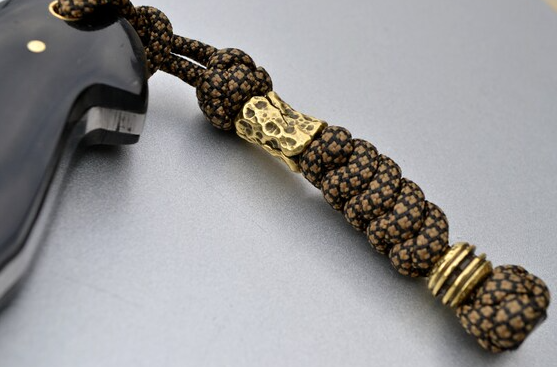
Paracord Bead Materials – Titanium vs Brass vs Stainless Steel
Fifteen years ago, knots (monkey fists, snake knots) were used, but they consumed 8-12 inches of paracord per termination point, wasting usable cordage. Simple, cheap aluminum beads introduced a critical failure point, causing paracord to fail at just 180 pounds of tension.
By 2015, the modern tactical bead evolved with CNC machining:
- Chamfered Bores eliminated sharp edges.
- Engineering-grade materials (Titanium, 316L) were used.
- Current designs maintain paracord integrity up to its full 550-pound rated strength.
Which Bead Diameter Works for Your Application?
| Diameter Range | Cord Type | Use Case | Typical Weight |
| 10-12 mm | 275 Paracord (2.4 mm) | Zipper pulls, keychain lanyards (ultralight) | 1.5-3 grams |
| 13-16 mm | 550 Paracord (4 mm) | Knife lanyards, bracelet terminals (universal standard) | 6-8 grams |
| 18-22 mm | 750/850 Paracord | Impact tools (glass breakers), counterweights (heavy-duty) | 15+ grams |
Engineering Principle: Bore diameter should be 0.5-1 mm larger than cord diameter for secure friction fit.
Integrated Tool Features: Separating Marketing from Utility
| Tool Feature | Material Requirement | Utility & Limitation |
| Fire Striker Notches | Brass or Steel | Utility: 3 mm deep notch generates sparks at 2,800°F. Limitation: Requires dedicated ferro rod contact. |
| Hex Wrench Cutouts | Any metal | Utility: Expedient wrench for low-torque tasks (3 mm, 4 mm, 5/32″ common). Limitation: Shallow engagement depth (8-10 mm) prevents high-torque use. |
| Tritium Vial Housings | Specialized machining | Utility: 25-year glow for low-light identification. Limitation: High cost ($40-80) due to regulated materials. |
| Glass Breaker Tips | Carbide or Hardened Steel (Rockwell C60+) | Utility: Concentrates force to fracture tempered glass. Limitation: Bead must weigh 20+ grams to provide sufficient striking mass (kinetic energy). |
The Three Most Common Mistakes That Destroy Tactical Beads
| Mistake | Consequence | Solution |
| 1. Installing Beads on Wet Paracord | Trapped moisture accelerates galvanic corrosion and mildew growth, causing failure in 18 months vs 10 years. | Always let paracord dry completely (24 hours minimum) before installation. |
| 2. Over-Tightening Beads with Pliers | Compresses inner strands, reducing tensile strength by 30-40% (550-pound cord fails at 320 pounds). | Hand-tighten only. If the bead slides, the bore diameter is incorrect. |
| 3. Mixing Dissimilar Metals in Marine Environments | Galvanic corrosion causes the anodic metal (e.g., brass) to pit and fail at 5-10x the normal rate. | Stick to single-metal systems (e.g., all steel) or use titanium as the universal pairing material. |
Installation Techniques: Securing Beads Without Damage
- Friction Fit Method: Thread cord through the properly sized bore (0.5 mm clearance). Preserves cord integrity and allows repositioning.
- Melt-Lock Termination: Melt the paracord end after threading and press it flat against the exit hole to create a permanent mushroom-shaped stopper. Consume cord.
- Cobra Weave Integration: Thread the bead onto the working cords mid-weave, making the bead a structural element that distributes stress.
The Case Against Tactical Beads: A Minimalist Perspective
Argument: Tactical beads are unnecessary weight and complexity for 90% of urban EDC users. The integrated tools (fire strikers, glass breakers) address low-probability, high-consequence scenarios that urban dwellers rarely face.
Counterpoint (EDC Philosophy): EDC embraces preparedness for unlikely events. The 8-gram weight is minimal, and the capability provided is essential when circumstances demand it (vehicle accident, wilderness emergency). For outdoor professionals, the bead is logical redundancy.
Maintenance: Keeping Tactical Beads Functional
- Monthly Inspection: Check bore edges for burrs and integrated tools for wear.
- Quarterly Cleaning: Polish brass/copper to remove oxidation. Clean stainless/titanium with soap and water.
Annual Replacement: Replace paracord every 2-3 years (UV/abrasion degradation). Replace beads only if showing cracks, deep pitting, or deformed bores.