
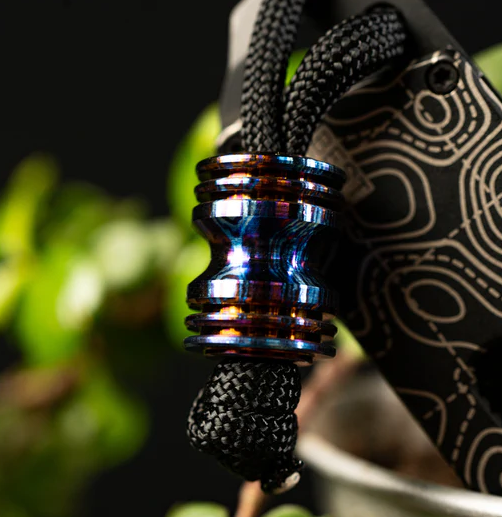

Timascus paracord beads combine titanium and damascus steel layering techniques to create unique, corrosion-resistant beads with distinctive wave patterns. They cost $3-5 more than standard titanium beads but offer unrepeatable visual patterns and superior durability for EDC accessories.
More about paracord beads:
What Exactly Is Timascus?
Timascus is a laminated material made by forge-welding multiple layers of different titanium alloys (typically CP titanium and Ti-6Al-4V) together, then manipulating them to create flowing patterns similar to damascus steel. The layered structure becomes visible after heat anodizing, which creates interference colors in the oxide layer. Each bead shows a one-of-a-kind pattern because the layering and manipulation process is never identical.

Timascus Bead Color Matching – Pairing Anodized Titanium with Earth Tone Paracord
The material weighs roughly 60% less than steel while maintaining comparable hardness (around 36-42 HRC depending on alloy mix). For paracord applications, this means a bead that won’t weigh down your lanyard or bracelet but still provides substantial heft and presence.
How Timascus Differs from Regular Titanium and Damascus Steel
| Feature | Timascus | Titanium | Damascus Steel |
| Pattern | Layered waves, visible after anodizing | Uniform or machined texture only | Layered waves, always visible |
| Weight | 4.5 g/cm³ | 4.5 g/cm³ | 7.8 g/cm³ |
| Corrosion Resistance | Excellent (passive oxide layer) | Excellent | Poor (requires oil/maintenance) |
| Color Options | Heat anodizing creates blues, purples, golds | Same anodizing range | Natural gray/silver only |
| Price (per bead) | $40-120$ | $15-35$ | $25-60$ |
The key difference: Timascus gives you the visual drama of damascus without the rust headaches. Damascus steel beads will corrode if exposed to sweat, saltwater, or even humid storage. Timascus forms a self-healing titanium dioxide layer that protects the base metal indefinitely.
Evolution: How We Got Here
Fifteen years ago, EDC enthusiasts had limited options for premium paracord beads.
- Most used brass or stainless steel—functional but heavy and prone to tarnishing or scratching.
- Around 2010-2012, makers experimented with anodized aluminum beads. They were lightweight and colorful, but the anodized layer wore through quickly because aluminum is too soft (around 15-20 HRC) for daily friction.
- Solid titanium beads emerged as the practical solution around 2013-2014, solving the weight and durability problems, but they lacked visual interest.
- Timascus appeared shortly after, borrowed from the custom knife world. It elegantly solved the aesthetic problem while keeping all of titanium’s practical advantages.
Why Choose Timascus Beads for Paracord Projects?
- Visual Uniqueness: No two timascus beads share identical patterns. You are adding a genuinely one-of-a-kind element.
- Durability without Maintenance: Unlike damascus steel, these beads require nothing. The self-healing oxide layer protects the metal indefinitely.
- Weight Optimization: A typical 12 mm bead weighs 2-3 grams—enough for satisfying heft on a lanyard, but comfortable for all-day wear on a bracelet.
Selecting the Right Bead: Size, Bore, and Pattern Considerations
- Bore diameter matters more than you think.For standard 550 cord (4 mm diameter):
- Single-strand applications (knife lanyards): Minimum 4.5 mm bore.
- Double-strand bracelet applications: Minimum 6 mm, preferably 7 mm.
- Bead external diameter affects visual balance.
- Knife lanyards on 3-3.5 inch handles: 10-12 mm bead looks proportional.
- Larger fixed blades: 14-16 mm beads.
- Bracelets: 10-12 mm is the sweet spot.
- Pattern density varies by maker. Some pieces show bold, high-contrast waves; others show fine, tight ripples. Bold patterns read clearly from arm’s length; fine patterns reward close inspection.
“When ordering online, always request a photo of the actual bead you’ll receive, not stock photos. Pattern variation is extreme. What looks like bold waves in the listing might be tight ripples in your specific piece. Reputable makers will send you a quick phone photo before shipping.”
Color and Anodizing: Understanding Your Options

Proper Bore Size for Timascus Paracord Beads – Threading 550 Cord Through Titanium Bead
Timascus beads come in three finish states:
- Heat Anodizing (Most Common): The maker heats the bead, and the titanium oxide layer grows to different thicknesses, creating organic, flowing colors (blues, purples, golds) that follow the layered structure. This color is permanent and won’t chip or peel.
- Voltage Anodizing: Uses electrical current to grow the oxide layer to a precise, uniform thickness, producing consistent single colors (e.g., blue at 40 V, yellow at 100 V.)
- Raw Finish: Shows the layered structure as subtle light and dark bands in gray tones. Ideal for a professional or tactical look.
Pairing Timascus with Paracord Colors
- Blue/Purple Anodizing: Pair with black, charcoal, or navy paracord for contrast, or royal blue for a monochromatic theme.
- Gold/Bronze Anodizing: Pair with coyote brown, ranger green, or burnt orange paracord (earth tones).
- Raw/Polished Finishes: Maximum flexibility. Use bright paracord (neon green, red) for high contrast.
Integration Techniques: Threading and Securing
- Cobra Weave Bracelets: Weave to the bead position, thread both core strands through, and continue weaving. The bead is locked in place.
- Knife Lanyards: Tie a diamond knot, thread the bead, tie another diamond knot. This prevents sliding. Leave 1-2 mm of slack between knots for a slight fidget factor.
Common Mistakes
- Threading paracord through a too-small bore. Forcing 550 cord through a 4 mm bore compresses and weakens the cord, potentially losing 30-40% of its strength at that point. Solution: Always use a 4.5 mm minimum bore for 550 cord.
- Placing beads at high-friction points. Positioning beads where they rub against a watch or the lanyard hole can cause the paracord sheath to fray. Solution: Position beads at low-friction zones.
- Over-tightening knots adjacent to beads. Cinching a knot tight against a bead creates a stress concentration point, risking cord failure under shock load. Solution: Leave 1-2 mm of slack between the knot and the bead, or use a small rubber O-ring as a buffer.
Maintenance and Longevity of Timascus Paracord Beads
- Maintenance: Almost none. Wipe with a dry cloth or use a microfiber cloth with rubbing alcohol to restore shine. Do not use abrasive polishes.
- Scratches: Fine scratches will blend into the pattern. Deep gouges are permanent but rare.
- Anodized Colors: Stable for decades under normal use. UV and sweat won’t fade or corrode them.
- Expected lifespan: Indefinite. The bead will outlast the paracord by decades.
The Strongest Argument Against Premium Beads
The counterargument is simple: cost. A 15$ plain titanium bead performs identically to an 80$ timascus bead in every measurable functional way (weight, corrosion resistance, durability). You are paying the premium solely for aesthetics and uniqueness.
- For users who view gear as pure tools (function over form), this expense is illogical.
- For the target audience (EDC enthusiasts who value craftsmanship and distinctiveness), the aesthetic value is the functional value. The pattern is the utility.
Where These Beads Make the Most Sense
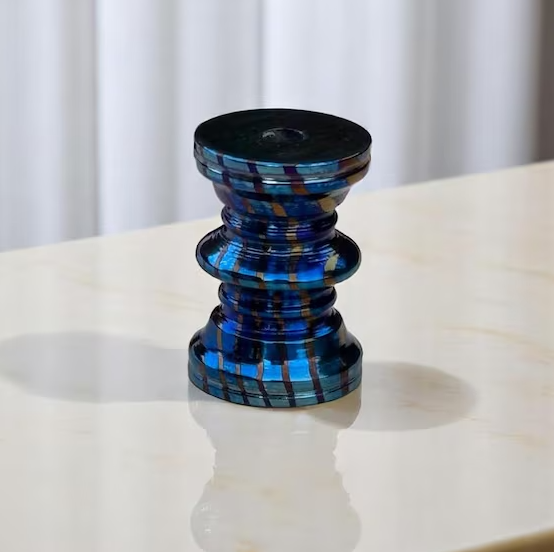
Timascus Paracord Beads – Heat Anodized Titanium Bead with Damascus-Style Layered Pattern
- High-end knife lanyards: Complements the quality level of custom folders ($300-500).
- Gift projects: The one-of-a-kind nature makes it a genuinely special gift.
- Personal signature pieces: Used to make custom work recognizable and premium.
- Collection items: Collected as miniature metalwork specimens.
Sourcing and Maker Considerations:
- Buy from established makers (check knife forums/Instagram portfolios).
- Ask for in-process photos and finished product photos of the actual bead you will receive.
- Expect $40-120$ per bead (most quality pieces are in the $60-80$ range).
- Ask about the maker’s heat-treat process (stress relief/annealing) to ensure structural integrity.
Timascus paracord beads deliver unique visual appeal and lifetime durability. If aesthetics and craftsmanship are high priorities for your EDC, the cost premium is justified.