


Brass paracord beads transform utility cord into something you actually want to wear. They add weight, durability, and visual appeal that improves with age. This guide covers what you need to know about using metal beads in your paracord projects.
More about paracord beads:
What Makes Brass Beads Different from Other Materials?
Brass beads are copper-zinc alloy beads designed to fit standard 550 paracord. Unlike aluminum or plastic, brass develops natural patina over time. The metal won’t crack, chip, or fade.
Weight matters here. A single brass bead weighs 3-8 grams depending on size. Aluminum beads of similar dimensions weigh only 1-2 grams. This extra heft makes bracelets and knife lanyards feel substantial without excessive pull.
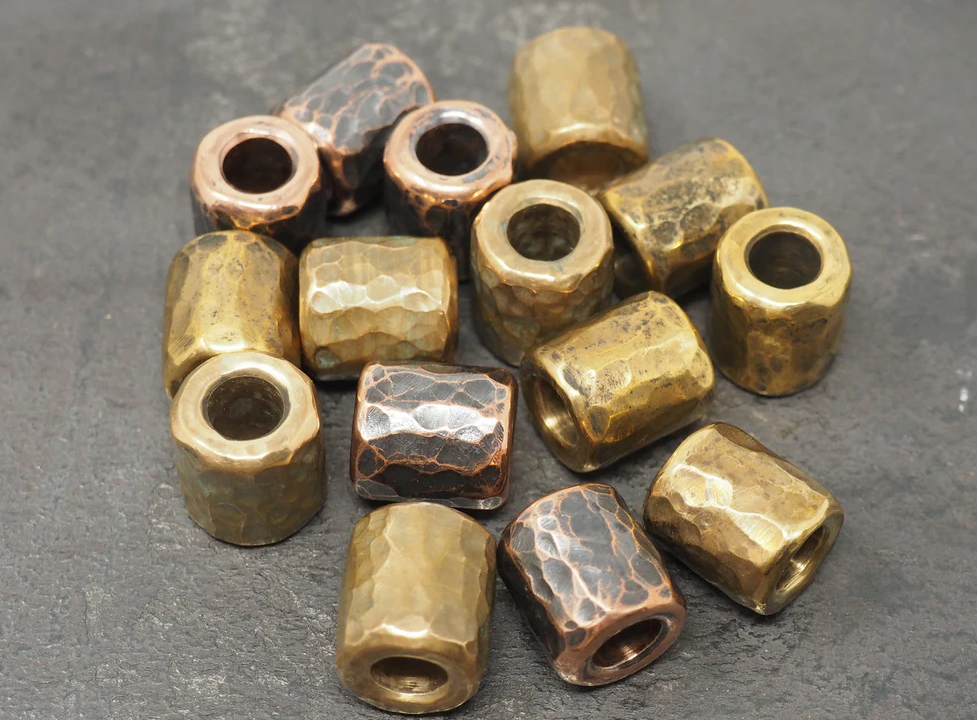
Compare different brass bead styles for your paracord project
Brass handles outdoor conditions better than most alternatives. It resists corrosion in humid environments. Salt water causes surface tarnish but won’t penetrate the metal like it does with steel.
“Never buy brass paracord beads with inner holes smaller than 4.5mm. Paracord swells when wet, and a 4mm hole that feels snug in the store will grip like a vise on a rainy hike.”
How Do Brass Paracord Beads Age Over Time?
Metal beads outlast the paracord by decades. The base material doesn’t degrade under normal use conditions.
The patina that forms is zinc oxide and copper oxide. This layer protects underlying metal from further corrosion. It works like seasoning on cast iron cookware—it keeps getting better and more protective.
Testing shows brass beads maintain structural integrity after 500+ hours of outdoor exposure. UV rays don’t affect metal. Rain doesn’t weaken it. Physical impact hard enough to dent the bead is the only real threat.
Fresh brass has a bright golden color. Within weeks of handling, it darkens to rich brown. To maintain original brightness, wipe cord accessories with microfiber cloth after each use. Body oils accelerate patina formation.
Common Styles of Brass Beads for Paracord
Cylinder beads are the workhorses. They measure 10-15mm long with straight walls. Use them as:
- Lanyard stops that prevent cord slippage on EDC gear
- Bracelet spacers between complex knot patterns
- Attachment points for carabiners and clips
Skull beads serve as visual anchors. Most measure 12-18mm tall. Detail level varies significantly. Machine-made skulls have soft features. Hand-carved versions show individual tooth marks and hollow eye sockets.
Tritium holders are cylinder beads with side cavity for glow tubes. The cavity measures exactly 6mm × 1.5mm to fit standard tritium vials. These turn paracord accessories into night navigation tools.
| Bead Style | Typical Weight | Best For | Avoid If |
| Cylinder (10mm) | 3-4g | Paracord bracelets, lanyards | You want visual impact |
| Skull (15mm) | 7-9g | Zipper pulls, knife lanyards | Weight is a concern |
| Tritium Holder | 5-6g | Emergency gear, EDC items | Project will see TSA screening |
The Evolution of Paracord Beads: From Knots to Metal
Ten years ago, paracord artists used only knots as decorative elements. The monkey’s fist knot served as a lanyard end. Celtic knots added visual breaks in paracord bracelets.
Knots have a fatal weakness: they loosen over time. Every flex of the tactical cord makes knots slightly looser. After six months of daily wear, a monkey’s fist that started firm feels spongy.
Early attempts used plastic pony beads from craft stores. They cracked quickly. Outdoor temperature swings made plastic brittle. A single drop on concrete shattered the bead.
Metal beads eliminated both problems. They never loosen because they’re not knots. They never crack because metal flexes without breaking. Modern brass beads function as structural anchors that keep complex patterns tight.
Why Brass Paracord Beads Cost More (And When It’s Worth It)
Machine-made brass beads run $2-5 each. Hand-carved versions start at $15 and reach past $100 for custom work.
The cost difference is labor hours. A CNC machine produces 50 identical paracord lanyard beads per hour. A craftsman spends 2-3 hours on a single detailed skull bead.
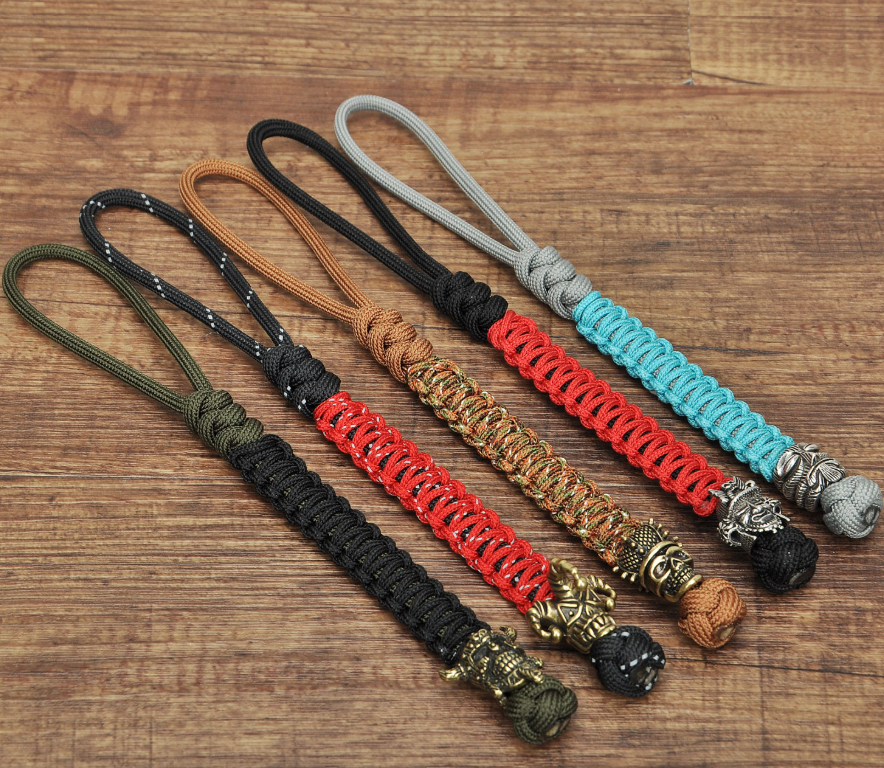
View brass bead installation on EDC knife lanyard
For functional paracord projects like dog leashes or gear tie-downs, machine-made beads deliver everything needed. The bead just needs to grip the cord and take abuse. For wearable items or gifts, hand-carved beads justify the cost. The detail level is immediately visible.
Three Mistakes That Ruin Brass Bead Projects
Mistake 1: Placing Beads Too Close to Working Knots
People stack brass beads right against cobra stitch patterns because it looks clean. This positioning seems logical for visual balance.
The cobra stitch flexes when you move your wrist. Each flex pulls 550 paracord through slightly. When a rigid brass bead sits against this flex point, it creates a fulcrum. The cord bends at a sharp angle instead of a gentle curve.
This concentrated stress point frays paracord in 2-3 months instead of normal 18-24 months. You lose 80% of project lifespan. Leave at least 10mm of space between beads and active knot structures.
Mistake 2: Using Smooth-Bore Beads on Vertical Projects
Smooth inner holes feel premium during assembly. The cord slides through effortlessly.
On vertical projects like knife lanyard beads or zipper pulls, smooth-bore beads slowly migrate downward. Each time you pull the item, the bead shifts a millimeter. After 100 uses, the bead has traveled several centimeters from its intended position.
Choose beads with knurled or scored inner surfaces. These micro-grooves grip the cord sheath. The bead stays exactly where you placed it. Horizontal projects like paracord bracelets can use smooth-bore beads safely.
Mistake 3: Mixing Brass with Stainless Steel Hardware
Brass paracord beads paired with stainless shackles create beautiful contrast. Gold and silver tones complement each other visually.
These two metals have different positions on the galvanic series. When they touch in the presence of moisture like sweat, they form a battery. Electrons flow from brass to steel. This is galvanic corrosion.
The brass slowly dissolves at contact points. On EDC accessories worn daily, you’ll see green residue within 3-4 months where metals meet. Keep different metals separated by at least 10mm of paracord, or stick to all-brass hardware.
The Strongest Counterargument: Weight Fatigue
Constant weight on your wrist creates measurable strain for some users. A paracord bracelet with four brass beads weighs 35-40 grams total.
Worn 12 hours daily, this creates wrist fatigue for people with small frames or previous injuries. Physical therapists note that sustained weight under 50 grams shouldn’t cause issues for healthy adults. That’s a narrow margin.
For people with arthritis, carpal tunnel, or wrist tendonitis, even 30 grams becomes noticeable after 3-4 hours. Lighter aluminum beads reduce total bracelet weight to 15-20 grams—cutting stress by half.
This doesn’t make brass wrong. It means context matters. A hiking lanyard benefits from brass durability. A daily-wear bracelet for someone with joint issues works better with aluminum.
Assembly Tips for Maximum Durability
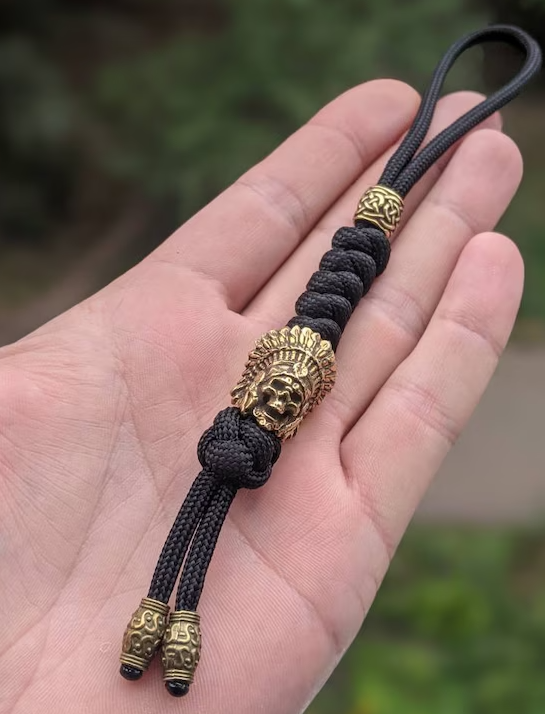
See how brass beads age naturally with patina over time
Follow these steps for professional results:
- Singe 550 paracord ends before threading through brass beads to prevent fraying inside the bead
- Use push-twist method for insertion—push cord while rotating clockwise to reduce diameter by 0.2-0.3mm
- Add drop of clear nail polish where cord exits bead to create flexible anchor that prevents migration
Always test-fit beads before final assembly. Inner diameter variations of 0.5mm can mean the difference between smooth sliding and cord damage.
When Brass Isn’t the Right Choice for Paracord
Brass beads fail in specific scenarios. Medical environments require non-reactive materials. Brass can cause skin reactions in people with copper allergies. Titanium beads avoid this issue completely.
Airport security flags dense metal objects. A bracelet with five brass paracord beads triggers hand wand inspection. If you travel weekly, consider carbon fiber beads at one-third the metal detector signature.
Extreme cold makes brass brittle. Below -20°F, brass loses ductility. A bead that would normally dent under impact can crack. Arctic applications need aluminum beads rated for cryogenic temperatures.
Resources for Deeper Learning
The Paracord Guild maintains a supplier database with user reviews that tests brass beads for dimensional accuracy and metal composition.
For hands-on instruction, Paracord Fusion Ties Volume 2 by J.D. Lenzen covers 15 paracord projects designed around brass bead integration with load-testing data for each design.
Brass paracord beads solve real problems. They add structural integrity. They survive environments that destroy alternatives. They age gracefully. Choose brass beads based on inner diameter first, weight second, aesthetics third. Get those priorities right and your projects last decades.