
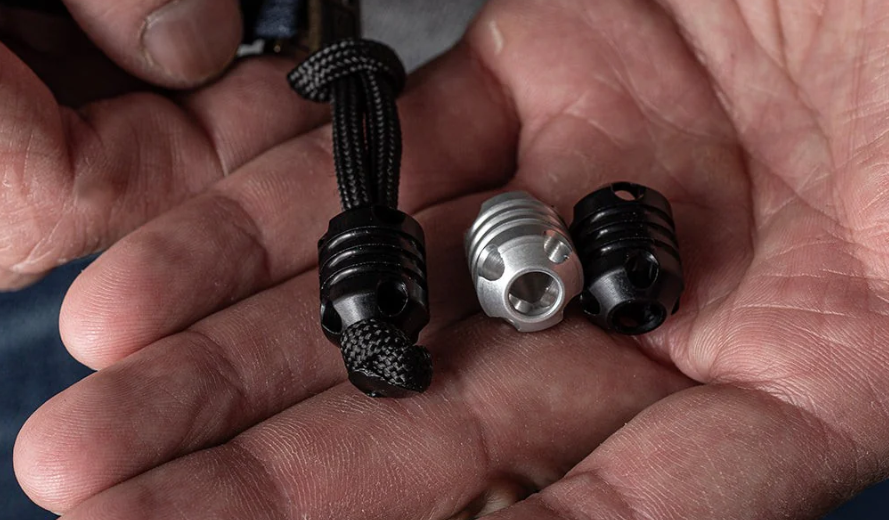

When you thread a CNC-machined titanium bead onto your paracord lanyard, you’re integrating a component manufactured to tolerances of 0.001 inches—precision that ensures your 550 cord slides through smoothly on the first attempt, every time. CNC (Computer Numerical Control) machining transforms raw metal stock into functional art through subtractive manufacturing, where rotating cutting tools remove material with surgical accuracy. For paracord enthusiasts, this means beads with perfectly consistent bore diameters, razor-sharp detail retention, and zero risk of the dimensional drift that plagues cast alternatives.
What Makes CNC Machining Superior for Paracord Beads?
CNC machining delivers three non-negotiable advantages: dimensional accuracy within microns, repeatability across production runs, and the ability to work with aerospace-grade materials that resist corrosion and wear. Unlike casting, which introduces porosity and requires secondary finishing, CNC operations execute the same toolpath identically every time. A 550 paracord bead with a 4.3mm bore will accept your cord smoothly with no binding or excessive play—the difference between a functional tool and desk clutter.
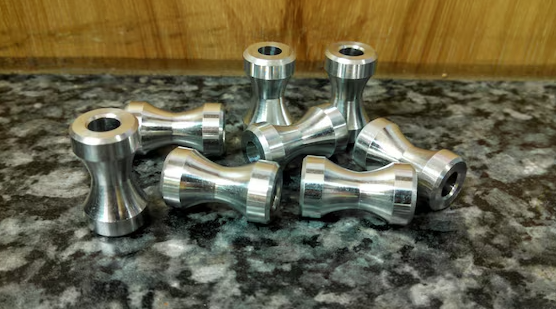
CNC Machined Paracord Beads – Precision Titanium & Brass EDC Components
The process begins with CAD modeling, where designers specify every chamfer and surface finish. This digital blueprint feeds directly into the CNC mill, eliminating human interpretation errors. For complex geometries—skull beads with hollow eye sockets or Celtic knots with undercuts—multi-axis CNC machines rotate the workpiece through five planes simultaneously, accessing angles impossible with manual tools.
Material removal rates directly impact your wallet. Titanium Grade 5 (Ti-6Al-4V) machines at 50-80 surface feet per minute using carbide tooling. Brass cuts faster at 200-300 SFM, explaining its lower cost despite similar raw material prices. These speeds determine production costs and retail pricing.
Evolution of Titanium Paracord Beads: From Cast to CNC
Fifteen years ago, paracord beads meant cast pewter skulls from craft stores—soft, detail-poor, and tarnishing within months. Casting excels at high-volume production but struggles with fine features; mold draft angles limit undercuts, and shrinkage during cooling creates dimensional inconsistencies. A cast bead’s bore might measure 3.8mm on one piece and 4.3mm on another from the same batch—unacceptable for precision EDC applications.
The industry experimented with investment casting for higher detail, but the multi-step process drove costs higher than CNC while delivering inferior tolerances. Metal injection molding (MIM) emerged as another contender, but produced beads with slightly porous surfaces requiring secondary sealing.
CNC machining solved these failures completely. It achieves detail resolution down to 0.005 inches, maintains bore consistency across thousands of units, and works directly with solid bar stock, eliminating porosity entirely. Modern 5-axis machines produce a finished titanium paracord bead—including internal threads for tritium vials—in a single setup, reducing handling and cumulative error.
Material Selection: Engineering Properties That Matter
Titanium Grade 5 dominates the premium segment for quantifiable reasons. Its strength-to-weight ratio means a 15mm bead weighs just 2.8 grams yet withstands 900 MPa tensile stress—enough to support a 200-pound load without deformation. Titanium’s passive oxide layer reforms instantly when scratched, maintaining corrosion resistance in saltwater indefinitely. The tradeoff? Machining titanium generates significant heat, requiring flood coolant and frequent tool changes, adding 40-60% to production costs versus brass.
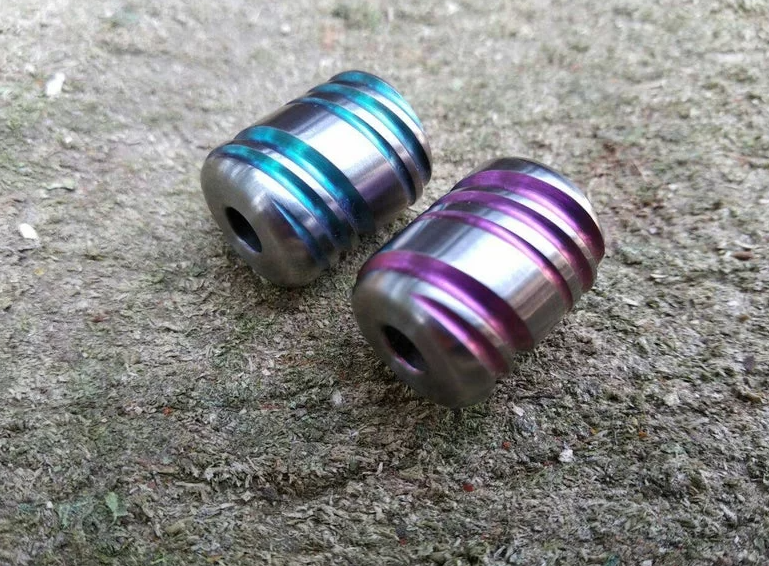
High-Tolerance CNC Paracord Beads with 4.3mm Bore for 550 Cord
Brass (typically C360 free-machining alloy) offers superior machinability and develops a rich patina over time. Its 8.5 g/cm³ density creates substantial hand-feel—a 12mm brass bead weighs 5.2 grams, providing satisfying heft for lanyard applications. However, brass oxidizes aggressively in humid environments without protective coating.
Copper adds antimicrobial properties (99.9% bacterial reduction within two hours, per EPA testing). Stainless steel 316L splits the difference: corrosion-resistant, moderately heavy, and affordable, though its work-hardening tendency causes tool wear.
The engineering compromise: Choosing titanium for permanence means accepting higher initial cost and limited patina development. Selecting brass for warmth and affordability requires embracing oxidation as character, not defect.
Custom Paracord Beads: Bore Diameter Compatibility
Paracord comes in distinct types with specific outer diameters: 550 paracord (Type III) measures 4mm, 425 cord runs 3 mm, and Micro cord sits at 1.18 mm. A properly engineered bead bore should exceed the cord diameter by 0.3-0.5mm for smooth threading without slop—for 550 cord, this means a 4.3-4.5 mm bore.
Why precision matters: A bore machined to 4.2mm will bind on 550 cord, especially when the nylon sheath compresses unevenly. A 5mm bore creates excessive play, allowing the bead to rotate freely and wear the cord through friction. CNC machining holds bore tolerances to ±0,05 мм, ensuring consistent fit across your entire collection. Custom paracord beads designed for specific cord types eliminate guesswork and deliver optimal performance.
The Three Mistakes That Destroy Your Bead Investment
- Mistake 1: Forcing oversized cord through undersized bores. You’ve found the perfect skull bead online, ordered it, and discovered your 550 cord won’t thread through. Rather than returning it, you force the cord, compressing the nylon sheath. Why people do this: They assume “paracord bead” means universal fit, and returning items feels like admitting defeat. The cost: Compressed paracord loses 15-20% of its tensile strength as inner strands bunch and bind. Your 550-pound-rated cord now breaks at 440 pounds—potentially catastrophic in survival scenarios. Always verify bore specifications before purchase.
- Mistake 2: Mixing dissimilar metals in saltwater environments. You’ve built a lanyard combining brass, copper, and stainless steel beads for visual contrast, then carry it during coastal activities. Why people do this: The mixed-metal aesthetic looks striking, and each material was individually corrosion-resistant. The cost: Galvanic corrosion occurs when dissimilar metals contact in the presence of electrolyte (saltwater). The more anodic metal (brass, copper) corrodes acceleratively. A brass bead that would normally patina gracefully over years can pit and weaken within months. Solution: Use single-metal systems for marine environments.
- Mistake 3: Storing anodized titanium beads in enclosed containers with moisture. Your collection lives in a sealed case in your gear bag. Why do people do this: Anodizing seems permanent, and titanium is “indestructible.” The cost: While titanium’s base oxide layer is self-healing, decorative anodizing creates a thicker, more fragile oxide structure. Trapped moisture creates humid microclimates. Repeated condensation cycles cause the anodized layer to delaminate in patches. A $45 purple-anodized bead develops gray spots within 6-8 months. Prevention: Store anodized pieces in breathable pouches with silica gel desiccant.
“The biggest mistake I see is people selecting beads purely on aesthetics, then discovering the bore won’t accept their preferred cord diameter. Always check bore specs first—a beautiful bead you can’t use is just expensive desk clutter. Second, understand that titanium’s lightness is a feature, not a bug. If you want to heft for a lanyard weight, choose brass or copper.”
The Strongest Argument Against CNC: When Casting Makes Sense
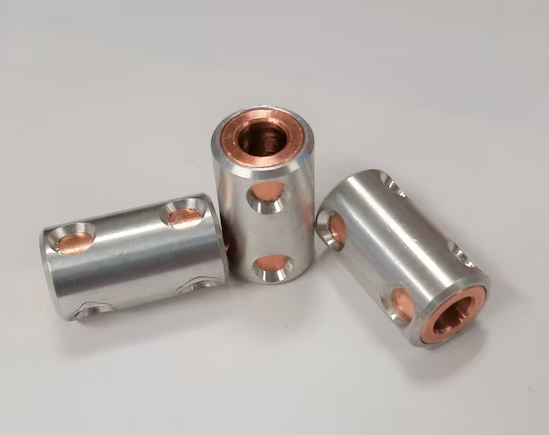
Titanium Paracord Beads – CNC Machined for EDC Lanyard Applications
CNC machining’s primary weakness is economic scalability. For production runs exceeding 10,000 units, investment casting’s per-unit cost drops to $1.50-2.50, while CNC remains at $8-12 due to fixed machine time. If you’re a manufacturer producing standardized beads for mass-market paracord bracelets, casting wins decisively.
Additionally, certain organic, flowing designs—like realistic animal forms with complex curves—may actually be easier to achieve through sculpting and casting than through CNC programming.
However, for the EDC enthusiast and custom maker, these scenarios rarely apply. You’re buying 1-50 beads at a time, not 10,000. You value dimensional precision for functional integration, not just appearance. You want materials like Grade 5 titanium that casting can’t economically deliver. For your use case, CNC’s higher per-unit cost buys tangible performance: perfect bore fit, superior material properties, and designs that physically couldn’t exist through casting.
Comparing Production Methods: Metal Beads for Paracord Applications
| Production Method | Dimensional Tolerance | Material Options | Surface Finish | Cost (per unit, 100qty) | Best Use Case |
| CNC Machining | 0.05 mm | All metals | As-machined to mirror | $12-45 | Premium EDC, custom designs |
| Investment Casting | 0.3 mm | Most metals | Requires finishing | $3-8 | High-volume decorative |
| MIM | 0.2 mm | Stainless, titanium | Slightly porous | $4-10 | Mid-volume functional |
“New makers often gravitate toward the most intricate designs, thinking complexity equals quality. Wrong. A perfectly executed simple bead—clean lines, flawless bore, thoughtful proportions—demonstrates more skill than a busy design hiding imperfect execution. Start with geometric forms. Master the fundamentals.”
CNC machined paracord beads represent the intersection of traditional craftsmanship and modern precision manufacturing. They transform functional cordage into personalized carry systems, where every component serves purpose and reflects individual aesthetics. Whether you’re weighing a knife lanyard, building an adjustable gear tether, or simply appreciating the satisfying click of metal beads for paracord, these precisely engineered components deliver performance that cast alternatives cannot match. From EDC accessories to tactical gear customization, machined beads offer durability and precision that elevate everyday carry items into reliable tools.