
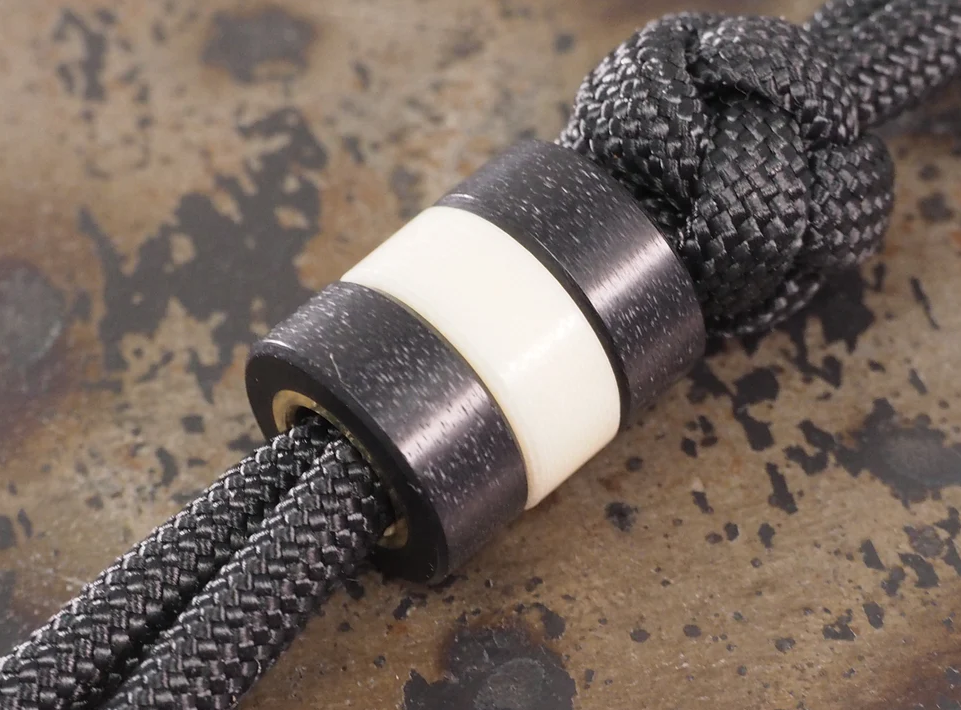

G10 paracord beads are machined accessories made from layered fiberglass-epoxy composite, designed to thread onto paracord for functional and decorative purposes in EDC gear, knife lanyards, zipper pulls, and survival bracelets. Unlike metal beads, G10 offers zero corrosion, silent operation, and customizable color layers while maintaining exceptional durability.
More about paracord beads:
What Makes G10 Different from Traditional Bead Materials?
G10 is a composite material originally developed for electrical insulation and knife handle scales. It consists of continuous fiberglass cloth soaked in epoxy resin, compressed under heat, and cured into solid sheets. This construction creates a material that’s lighter than aluminum, doesn’t rust like brass or steel, and won’t conduct cold like titanium in winter conditions.
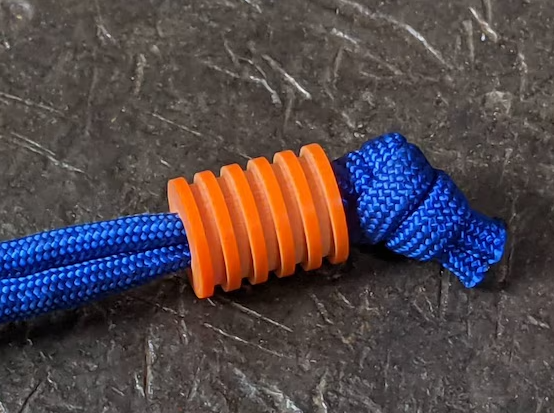
G10 Paracord Beads – Lightweight Fiberglass Composite Alternative to Metal Hardware
The practical differences show up immediately in daily carry. A brass bead on a knife lanyard adds 8-12 grams and clinks against metal surfaces. The same-sized G10 bead weighs 2-3 grams and stays silent. For someone carrying multiple tools with cord attachments, this weight difference compounds quickly.
G10 also offers visual customization that metal can’t match. Manufacturers layer different colored fiberglass sheets before compression, creating striped or marbled patterns throughout the bead’s thickness. When machined, these layers become visible on all surfaces, producing unique patterns that complement knife scales or flashlight bodies.
The Engineering Behind G10’s Durability
The fiberglass-epoxy matrix distributes stress across thousands of individual glass fibers rather than relying on a single material’s strength. This structure resists impact damage that would dent softer metals. Drop a brass bead on concrete and it deforms. Drop G10 and it typically bounces without damage.
Temperature stability matters for outdoor gear. G10 maintains its properties without becoming brittle or softening. Metal beads conduct temperature extremes directly to your fingers—uncomfortable when handling frozen gear or sun-heated equipment. G10’s low thermal conductivity keeps it closer to ambient temperature.
The material’s moisture resistance comes from its closed structure. Unlike anodized aluminum that can corrode if the coating scratches, or brass that tarnishes in humid environments, G10 doesn’t react with water, salt, or most chemicals. Saltwater fishermen and coastal users particularly value this property.
Choosing the Right Paracord Bead Size and Bore Diameter
Bead selection depends on three primary factors: bore diameter, external dimensions, and intended function.
- Bore diameter must match your cord type. Standard 550 paracord (7-strand) measures approximately 4 in diameter. Most G10 beads designed for 550 cord have 4.5-5 bores, allowing the cord to pass through with minimal friction. Micro cord (1.18) and nano cord (0.75) require proportionally smaller bores around 1.5-2.
- Tight-fitting beads create friction that helps them stay positioned on the cord without additional knots. Loose-fitting beads slide freely, useful for adjustable applications like zipper pulls or sliding closures. Test-fit your specific paracord before committing to a design—cord diameter varies slightly between manufacturers.
- External dimensions affect both aesthetics and function.
- Smaller beads (8-12 length, 6-8 diameter) work well for bracelet accents or multiple-bead designs where you want visual texture without bulk.
- Medium beads (12-18 length, 8-12 diameter) suit knife lanyards and keychain applications.
- Larger beads (18-25 length, 12-15 diameter) provide substantial grip for zipper pulls or serve as focal points in paracord projects.
- Weight becomes relevant for items that swing or dangle. A lanyard bead on a folding knife should add enough weight to help extract the knife from a pocket but not so much that it pulls the knife out unintentionally. For most pocket knives, beads in the 3-6 gram range hit this balance.
Matching Bead Profiles to Applications
- Cylindrical beads with straight walls offer maximum internal volume for the smallest external footprint. They’re ideal when you need to pass double cord through the bead or want to hide knots inside the bore.
- Barrel-shaped beads (wider in the middle, tapered at ends) provide a better grip surface. The curved profile sits more comfortably in your palm when used as a pull handle on zipper sliders or drawstring closures.
- Skull beads, hex-faceted beads, and other decorative shapes prioritize aesthetics. These work best as terminal beads (end pieces) rather than mid-cord elements, since their irregular shapes can snag on fabric or create pressure points.
“When pairing G10 beads with G10-scaled knives, match the layer orientation rather than exact color. A bead with horizontal stripes complements vertical-striped scales through contrast, creating visual interest without clashing. Exact color matching often looks forced unless you’re using solid colors.”
Real-World Performance of G10 Lanyard Beads
G10’s abrasion resistance exceeds most metals in practical use. The fiberglass-epoxy matrix doesn’t scratch in the traditional sense—it may show scuff marks from extreme abrasion, but these don’t compromise structural integrity. Brass and aluminum beads develop scratches that catch light and show wear patterns within weeks of pocket carry.
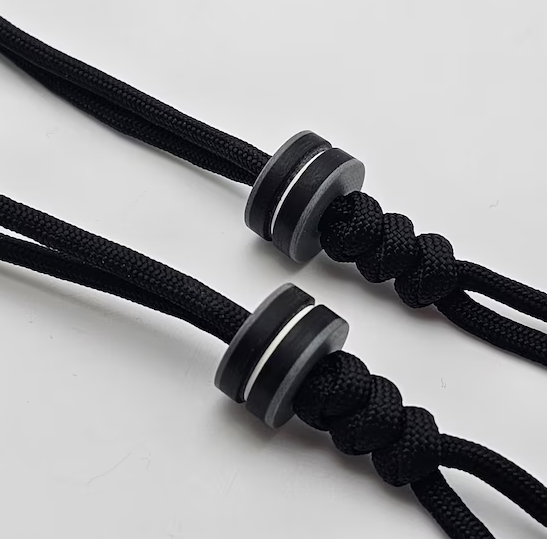
G10 vs Metal Paracord Beads – Material Comparison for EDC Gear and Knife Lanyards
The material’s grip texture varies by manufacturer. Some leave the machined surface relatively smooth, while others add knurling or texture patterns. Smooth G10 still provides more grip than polished metal due to the material’s inherent surface properties. The fiberglass content creates a microscopic texture that prevents slipping even when wet.
Chemical resistance matters for work environments. G10 withstands exposure to most solvents, oils, and cleaning chemicals without degradation. This makes these accessories suitable for tool lanyards in automotive shops, marine environments, or industrial settings where metal beads would corrode or require frequent replacement.
The Acoustic Advantage
Silent operation isn’t just about stealth—it’s about reducing noise pollution in your daily carry. Metal beads on keychains create constant jingling. Multiple metal beads on a survival bracelet click together with every arm movement. G10 beads eliminate this noise entirely.
For hunters, photographers, or anyone requiring quiet movement, this matters significantly. A lanyard bead that doesn’t announce your presence when drawing a knife or accessing gear provides tactical advantage without requiring specialized “tactical” features.
How Has Paracord Bead Design Evolved?
Fifteen years ago, paracord enthusiasts had two primary options: cheap plastic pony beads from craft stores or expensive custom metal beads from knifemakers.
- Plastic beads worked functionally but looked juvenile and cracked under stress.
- Metal beads offered durability and aesthetics but came with weight, cost, and corrosion issues.
- Ceramic beads (2010-2012) offered aesthetics and corrosion resistance, but brittleness proved fatal (shattered when dropped).
- Wood beads provided beautiful grain patterns and light weight, but moisture absorption caused swelling that could trap cord. Stabilized wood increased cost.
G10 emerged as the solution that addressed previous materials’ shortcomings. It combined plastic’s light weight and corrosion resistance with metal’s durability and premium appearance, while avoiding ceramic’s brittleness and wood’s moisture sensitivity. The material’s existing use in knife handles meant machining infrastructure and expertise already existed.
What Are the Most Common Mistakes When Using G10 Beads?
Mistake 1: Over-tightening knots inside the bead bore
People assume that cranking down a stopper knot as tight as possible inside a G10 bead will prevent slippage. The logic seems sound—maximum friction equals maximum security.
The cost: Paracord is designed to stretch slightly under load. When you over-tighten a knot inside a rigid bore, you pre-stress the cord fibers and create a stress concentration point. Under repeated loading (like swinging a lanyard knife out of your pocket 20 times daily), the cord fatigues at this exact point. Result: Your paracord fails after 2-3 months instead of lasting years. You lose the entire lanyard and potentially your knife if it fails at the wrong moment.
Mistake 2: Mixing G10 beads with metal hardware on the same cord section
Combining a G10 bead with a metal snap shackle or carabiner on a short lanyard creates an attractive mixed-material aesthetic. The contrast looks intentional and designed.
The cost: Metal and G10 have different hardness values. When they contact each other repeatedly during use, the harder material (usually the metal) acts as an abrasive against the G10. This isn’t catastrophic, but over 6-12 months of daily carry, you’ll see wear patterns on the bead where it contacts metal. More importantly, the metal component transfers impact shock directly through the system. A dropped knife with mixed materials concentrates stress at the material transition point. You’re introducing a weak link into an otherwise robust system.
Mistake 3: Assuming all G10 is created equal
G10 is G10, right? If you’re buying beads specifically for paracord use, the material should perform identically regardless of manufacturer or price point.
The cost: G10 quality varies significantly based on the fiberglass weave density, epoxy formulation, and curing process. Low-grade G10 uses coarser fiberglass cloth and less precise curing, resulting in material that can delaminate under stress. Budget beads machined from inferior G10 may develop hairline cracks between layers after 6-8 months of use, especially if exposed to temperature cycling. Premium G10 from established manufacturers (typically used in knife scales) costs more but maintains structural integrity indefinitely. Price difference: $3 versus $8 per bead. Longevity difference: 1 year versus 10+ years.
Comparing G10 to Alternative Bead Materials
| Material | Weight (12mm bead) | Corrosion Resistance | Grip (Wet) | Acoustic | Temperature Feel | Typical Cost |
| G10 | 2-3 | Excellent | Very Good | Silent | Neutral | $5-12 |
| Brass | 10-12 | Poor (tarnishes) | Good | Loud | Extreme | $8-15 |
| Titanium | 5-6 | Excellent | Fair | Moderate | Extreme | $20-40 |
| Aluminum | 3-4 | Good (if anodized) | Fair | Loud | Extreme | $6-12 |
| Stainless Steel | 9-11 | Very Good | Good | Loud | Extreme | $10-18 |
The table reveals G10’s unique position: it combines the best properties of multiple materials without their primary drawbacks. Only titanium competes on corrosion resistance, but at 3-4x the cost and with inferior grip characteristics.
When Metal Beads Make More Sense
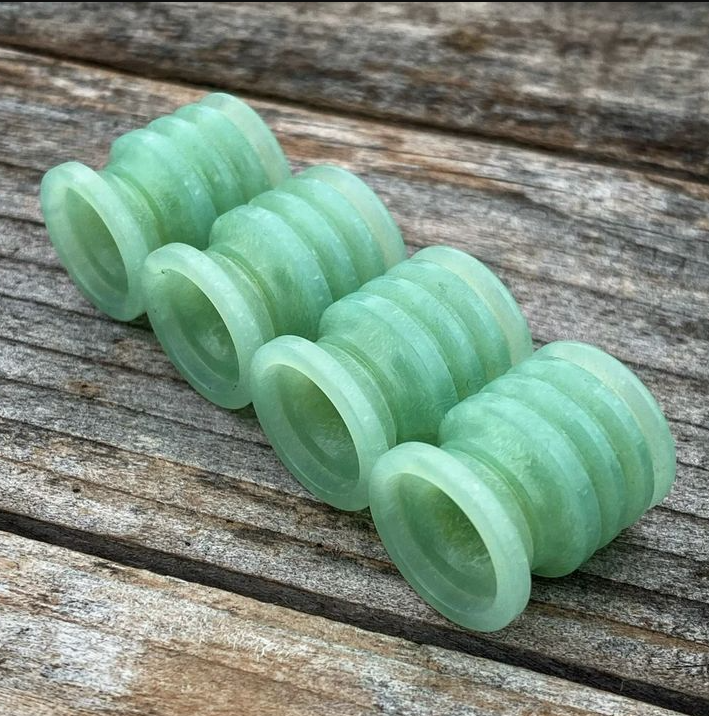
G10 Lanyard Bead Installation on EDC Knife – Proper Paracord Attachment Technique
G10’s advantages are substantial, but metal beads remain superior for specific applications. The strongest argument against G10 centers on weight-dependent functionality.
- Lanyard beads on large fixed-blade knives benefit from metal’s mass. A $15-20 brass or steel bead provides momentum that helps swing the knife into position when drawing from a belt sheath. G10’s light weight doesn’t generate enough momentum for this technique to work reliably.
- Similarly, zipper pulls on heavy-duty bags or tactical gear sometimes require substantial weight to hang properly and remain accessible. A lightweight G10 bead may not provide enough gravitational pull to keep the zipper pull positioned correctly when the bag is oriented at various angles.
- Metal beads also offer superior performance in extreme abrasion environments. While G10 resists normal wear excellently, applications involving constant contact with rock (climbing gear, caving equipment) or industrial abrasives will eventually wear G10 faster than hardened steel.
For these specific scenarios—heavy fixed blades, weight-dependent mechanisms, or extreme abrasion environments—metal beads remain the practical choice. G10 dominates in the broader category of EDC accessories, pocket knives, and general paracord projects where its advantages outweigh the lack of mass.
“Test your bead choice in actual use conditions before committing to a final design. What works perfectly on your workbench may behave differently after a week in your pocket or pack. I prototype every lanyard design with the actual bead material and carry it for at least two weeks before finalizing specifications.”
How to Attach G10 Beads to Paracord Projects
- Stopper technique: Thread your paracord through the bead, tie an overhand knot or figure-eight knot below it, and trim excess cord. This works for terminal applications like lanyard ends or bracelet closures.
- Sliding technique: Use a larger bore diameter and skip the stopper knot. The bead moves freely along the cord, useful for adjustable closures or decorative elements that you want to reposition.
- Captured bead technique: Thread the bead onto cord, then tie stopper knots on both sides. This locks the bead in position while allowing the cord to flex naturally. This method works well for knife lanyards where you want the bead positioned at a specific distance from the knife for optimal grip.
- Stacked bead designs: Multiple beads on the same cord section create visual interest and texture. Alternate beads in different colors or mix G10 with other materials (keeping in mind the wear considerations mentioned earlier). Space beads with small knots or leave them loose to slide and stack naturally.
Color coordination matters more than exact matching. A black G10 bead with green layer lines complements OD green paracord better than solid black. The layer lines create visual connection without demanding perfect color matching.
What Maintenance Do G10 Beads Require?
Effectively none. G10’s closed structure doesn’t absorb oils, dirt, or moisture. Wipe with a damp cloth if it gets dirty. That’s the complete maintenance protocol.
Unlike metal beads that require periodic polishing or brass beads that need tarnish removal, G10 maintains its appearance indefinitely with zero intervention. The material doesn’t patina, oxidize, or change color with age or UV exposure.
If a G10 bead develops scuff marks from extreme use, you can restore the surface with fine sandpaper (400-600 grit). Sand lightly in the direction of the layer lines, wipe clean, and the bead looks new. This works because G10’s color and pattern extend throughout the material thickness, not just on the surface.
The Bottom Line on G10 Paracord Beads
G10 beads occupy the sweet spot between functionality and aesthetics for most paracord applications. They deliver metal-level durability at plastic-level weight, with corrosion resistance that exceeds both. The material’s silent operation, neutral temperature feel, and customizable appearance make it ideal for EDC gear, knife lanyards, and outdoor equipment.
Choose G10 when you want your paracord projects to perform reliably across varied conditions without the maintenance demands or weight penalties of metal alternatives. The material works particularly well for anyone building cohesive gear systems around G10-scaled knives or tools, creating visual consistency across your carry setup.
For applications requiring significant mass or extreme abrasion resistance, metal beads remain relevant. But for the majority of paracord projects—from survival bracelets to zipper pulls to knife lanyards—G10 provides the optimal balance of properties that matter in actual daily use.